
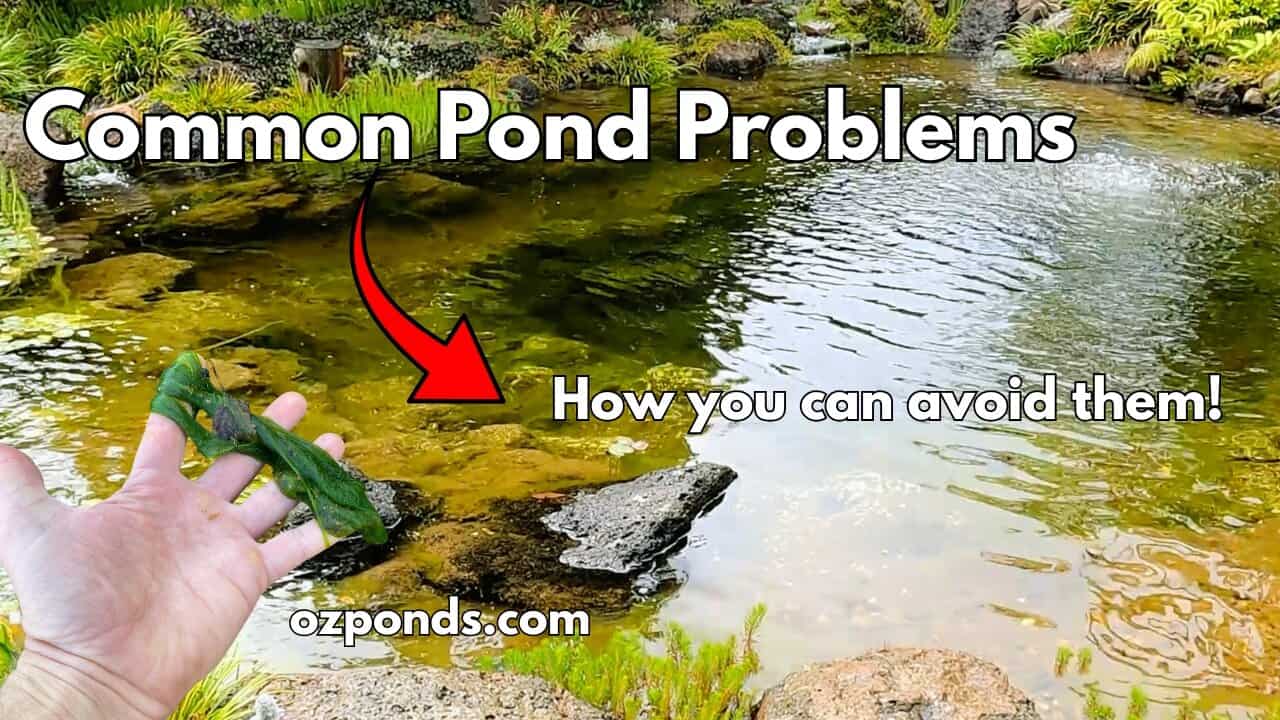
If you’re about to build a pond — or you already have one and it’s not quite going how you hoped — there are a handful of common mistakes that cause most of the problems I see.
The good news is… most of these problems are predictable.
And once you understand how ponds actually work, they’re also avoidable.
In this post and attached videos, I’ll walk you through the most common pond mistakes — and how to avoid them so your pond becomes something you enjoy, not something you’re constantly fixing.
1. No Plan (Or No Budget Plan)
One of the biggest mistakes is starting without a proper plan.
People dig a hole, buy a pump, grab a filter — and hope it all works out.
But ponds are systems.
And every pond is different.
A pond for frogs and tadpoles has very different requirements to a pond for koi, ducks or turtles.
Before I design a pond, I always think about:
- What is the pond for?
- What animals will live in it?
- How will people interact with it?
- Do I want a natural pond or a very clean one?
- How will I manage waste?
Because every pond produces waste.
You need a plan for how you’re going to deal with it.
Design Your Pond Using The Same System I Use
- A simple system that has helped people around the world design clear, low-maintenance ponds without spending a fortune.
- Includes access to the Private Ozponds community and Virtual Kev, a tool that helps you plan your pond step-by-step.
Once you have a plan, budgeting becomes much easier. It’s a lot better to adjust things on paper than when you’re standing in a big hole wondering what you’ve done.
2. Poor Pond Location
Location matters more than most people think.
Under trees
Ponds under trees can work well, especially because shade helps reduce algae. But you’ll need to manage:
- falling leaves
- root growth
- debris buildup
Full sun
A lot of people worry about full sun causing algae.
In my experience, with good design, it’s not something to stress about too much.
Low spots (catchment areas)
This is a big one.
If you place a pond in a low spot, water will naturally flow into it — bringing nutrients, sediment and pollutants with it.
That makes maintaining clear water much harder.
If your goal is a natural water storage pond, that’s fine.
But if your goal is a clean, controlled backyard pond, it’s better to avoid low spots.
Near the house
I personally love ponds close to the house.
But you do need to think about:
- overflow during rain
- water direction
- fencing requirements
3. Poor or Undersized Filtration
All ponds produce waste.
Filtration is simply how we manage it.
There are two main types:
Mechanical filtration
This removes physical debris:
- leaves
- pollen
- floating material
This is usually done with skimmers or intake bays.
Biological filtration
This grows beneficial bacteria and organisms that process waste.
In my ponds, I usually use a bog filter.
A bog filter mimics a wetland:
- rock and gravel provide surface area
- plants absorb nutrients
- microbes break down waste
The system I use
Water is:
- Pulled into a skimmer or intake bay
- Pumped to a bog filter
- Returned to the pond
It’s simple, scalable, and easy to maintain.
And most importantly — it works.
4. Choosing the Pump in Isolation
Pumps don’t exist on their own.
They are part of the system.
Things that affect pump choice:
- filter type
- flow requirements
- height and distance
- waterfalls and streams
- circulation needs
A very common mistake is choosing a pump without considering the full system.
I prefer variable speed pumps so I can adjust flow as needed.
5. Cheap or Incorrect Liner
The liner is one area I don’t cut corners.
If I’m building a natural-looking pond with rocks and plants, I use EPDM rubber liner.
It’s:
- durable
- flexible
- proven
If something fails under tons of rock and gravel… it’s a lot of work to fix.
There are cheaper options if you aren’t using rock and pebble.
6. Not Enough Depth
Depth affects stability.
Shallow ponds:
- heat up quickly
- cool down quickly
- are less stable
Deeper ponds:
- hold temperature better
- support more stable ecosystems
As a rough guide:
- shallow ponds need more care
- deeper ponds are more forgiving
7. Lack of Aeration
Everything in your pond uses oxygen:
- fish
- bacteria
- microorganisms
Without enough oxygen, problems start quickly.
Ways to add oxygen:
- waterfalls
- streams
- aerators
- fountains
- jets
Warm water holds less oxygen, so this becomes even more important in summer.
8. Overstocking and Overfeeding
More fish = more waste.
More food = more nutrients.
That means:
- more filtration needed
- more maintenance required
I personally prefer:
- fewer fish
- smaller species
- natural food sources
It keeps the system simple and stable.
9. Over-Cleaning the Pond
This one surprises people.
You can actually clean a pond too much.
The biology in your pond — bacteria, algae, plants — is what keeps it balanced.
If you remove all of that at once, the system resets.
That can lead to:
- ammonia spikes
- fish stress or death
- unstable water
Better approach:
- clean gradually
- leave some biology intact
- let the system recover naturally
10. Letting Plants Take Over
Plants are incredibly useful:
- they absorb nutrients
- provide habitat
- improve water quality
But they can also:
- block flow
- trap debris
- take over the pond
Balance is key.
I often keep:
- plants in bog filters
- marginal plants around edges
- open water in the main pond
11. Ignoring Seasonal Changes
Ponds change with the seasons.
That’s normal.
In colder months:
- biological activity slows
- plants stop growing
- nutrients build up
In warmer months:
- plants grow
- bacteria become more active
- the system balances itself
The key is understanding that ponds go through cycles.
Not every change needs intervention.
The Ozponds System
There are lots of ways to build a pond.
But every pond I build follows the same basic principles.
That’s the system I’ve put together in my Pond Formulas Blueprint.
It’s not about copying my pond.
It’s about understanding the thinking behind it so you can apply it to your own setup.
Practical Takeaways
If you want to avoid most pond problems:
- Plan before you dig
- Choose the right location
- Build enough depth
- Size your filtration properly
- Match your pump to your system
- Don’t overstock
- Don’t over-clean
- Let the biology do its job
Most pond problems aren’t random.
They’re predictable.
About to build a pond… or already have one?
Sign up for my email list and I’ll send you DIY-friendly pond tips, along with a few helpful tools like calculators, gear recommendations, and more.