

Algae is one of the most common frustrations pond keepers face. A bit of green on the rocks is fine, but when the water turns into pea soup or string algae takes over, it can feel like a losing battle.
Many pond owners reach straight for algaecides — those bottles of quick-fix chemicals promising crystal-clear water overnight. But here’s the truth: used the wrong way, algaecides can actually do more harm than good to your pond’s ecosystem.
In this article, we’ll look at:
- Why algae isn’t always the enemy
- The dangers of using algaecides
- Safer alternatives for managing algae
- How to build an ecosystem pond that balances itself
Why Algae Isn’t Always the Enemy
Believe it or not, algae plays a vital role in a healthy aquatic ecosystem:
- Nutrient control: Algae absorbs excess nitrogen and phosphorus, helping to prevent water quality issues.
- Natural food source: Tiny creatures and even some fish graze on algae as part of their diet.
- Oxygen production: During the day, algae photosynthesises and adds oxygen to the water.
So while it doesn’t look great when it takes over, a little bit of algae is not only normal — it’s beneficial.
The Hidden Dangers of Algaecides
Here’s the catch: when you kill algae suddenly with a strong chemical, all that dead material begins to decompose at once. The decomposition process uses up oxygen, and this can cause:
- Oxygen crashes that stress or kill fish
- Damage to your biological filter, which also relies on oxygen to process fish waste
Many algaecides also contain copper, which is toxic to pond critters with exoskeletons — shrimp, yabbies, freshwater mussels, copepods, and more.
These aren’t just “extras” in your pond — they’re vital members of the ecosystem, helping to recycle waste and forming part of the natural food chain.
Safer Alternatives to Algaecides
If algae is getting out of control, there are gentler ways to bring it back into balance:
- Barley straw: As it breaks down, it releases natural compounds that help prevent algae growth.
- Hydrogen peroxide: Used carefully, it adds oxygen to the water as it breaks down — safer than most chemical treatments.
- Sodium per-carbonate: A great option for spot-treating stubborn algae on waterfalls and rocks.
👉 Pro tip: Whatever method you use, treat your pond in sections rather than all at once. This prevents a sudden oxygen crash if a lot of algae dies off.
Click here to see the water treatments I’m happy to use in my ponds.
Don’t Forget Oxygen
Healthy oxygen levels are critical during any algae treatment. Keep an eye out for signs of low oxygen:
- Fish gasping at the surface
- Fish hanging around waterfalls or returns
You can also use a dissolved oxygen test kit for a more accurate read. Adding aeration or a waterfall feature can give your pond that extra boost when it’s needed most.
The Ecosystem Approach
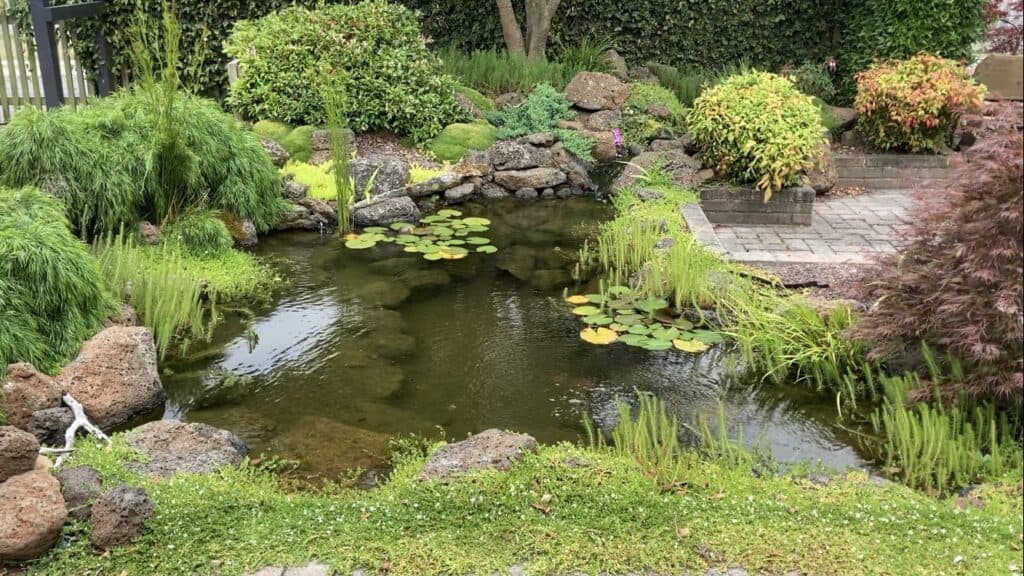
Personally, I don’t stress about a bit of algae. In fact, during the colder months when plants and bacteria slow down, algae often steps up as the main filter in the pond — keeping nutrients in check.
That’s why my philosophy is to work with nature. By combining:
- Sensible stocking of fish
- Healthy plant cover
- A bog filter or natural filtration system
- Beneficial organisms
…you can create a pond that naturally balances itself. In this kind of system, algae becomes a manageable part of the ecosystem instead of a problem that needs nuking with chemicals.
Final Thoughts
Algae isn’t always bad. Algaecides aren’t always good. The real secret is finding balance and building a pond where nature does most of the heavy lifting for you.
Want More Help With Your Pond?
If you’re looking to design a crystal-clear, low-maintenance pond without the guesswork:
👉 Download my Free Pond Planning Bundle — it includes a planning checklist, bog size calculator, and pump flow calculator.
👉 Ready to go deeper? Check out my Pond Formulas Blueprint — the complete system I use and recommend for designing healthy, balanced ponds.
About to build a pond… or already have one?
Sign up for my email list and I’ll send you DIY-friendly pond tips, along with a few helpful tools like calculators, gear recommendations, and more.