
When people struggle with cloudy water, unhealthy fish, or ponds that feel like way too much work, the problem often comes down to one thing: the filter is too small—or not set up properly.
In this post, we’ll unpack why filter size really matters, what’s happening inside your filter, and how to match the system to your pond.
What Does a Pond Filter Actually Do?
Your filter isn’t just there to catch leaves and muck. Its real job is biological: providing a home for beneficial bacteria.
These bacteria eat fish waste, break it down into harmless compounds, and keep your water clean and healthy. But they don’t just float around—they need surfaces to cling to.
That’s why surface area is everything. The more surface area inside your filter, the more bacteria it can support, and the more waste your pond can process.

Surface Area and Filter Media
Not all filters or filter media are created equal.
- Bog filters use rock and pebbles, with water flowing upward so bacteria can colonise the surfaces.
- Rock size matters: fine gravel has more surface area than chunky river rock, but it can clog faster and be harder to clean.
- Synthetic filter media can pack a huge amount of surface area into a small space, while still keeping good flow.
The trick is balancing surface area with ease of maintenance.
Flow Rate and Filter Capacity
If your filter is on the smaller side, you can move more water through it to help bacteria keep up. But there’s a limit—throwing a giant pump at a tiny filter won’t magically fix cloudy water.
Eventually, the bacteria just won’t be able to keep up, and string algae will take over.
Your Whole Pond Is a Filter
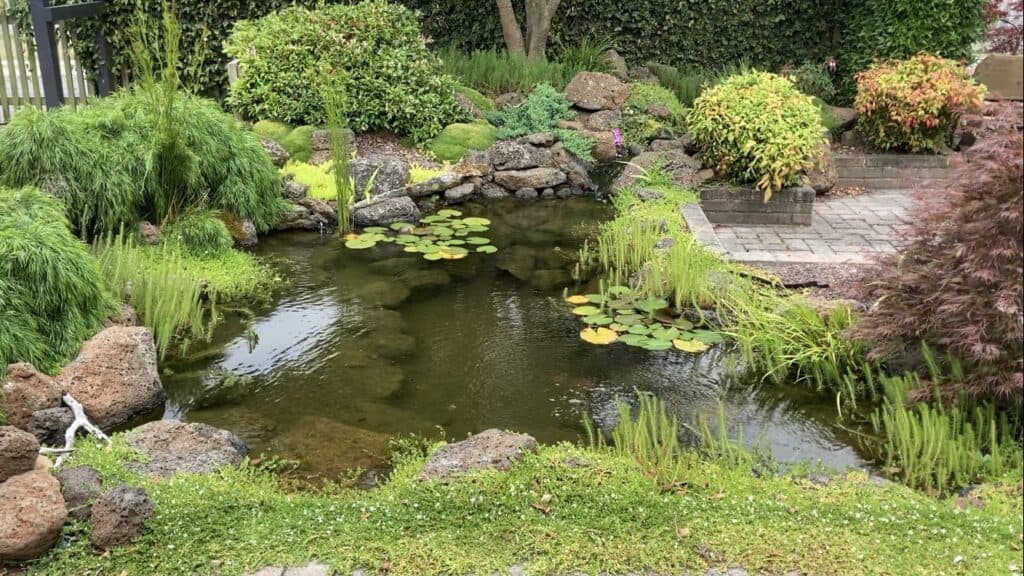
Remember: it’s not just about one filter box. A well-designed pond turns the entire ecosystem into a filter.
- Rock and pebble provide surface area.
- Plant roots create more bacterial habitat.
- Tiny critters like Daphnia and copepods act like living filters, naturally cleaning the water.
- Skimmers, intake bays, and negative edges help remove debris before it sinks and rots.
When everything works together, your pond becomes much lower maintenance.
How Much Filtration Do You Need?
It depends on the pond:
- Small goldfish pond with lots of plants: you can get away with less filtration.
- Koi pond with heavy fish load: you’ll need way more surface area and filtration capacity.
Don’t just copy someone else’s setup—design your filter to suit your pond and your goals.
Want a Step-by-Step System?
If you want to take the guesswork out of pond filtration, I cover this in detail in my Pond Formulas Blueprint.
Inside, I show you how to design a filter based on pond size, fish load, and flow rate—plus you get access to KevBot, an AI version of me trained to answer pond questions.
You’ll also get access to a private community of pond builders following the same approach.
And if you’re not ready for that yet, no worries—I’ve got heaps of free guides and tools on to help you get started.
Final Thoughts
Filter size isn’t just a detail—it’s the heart of a healthy, low-maintenance pond. Get it right, and you’ll spend less time fighting cloudy water and more time enjoying your fish.
About to build a pond… or already have one?
Sign up for my email list and I’ll send you DIY-friendly pond tips, along with a few helpful tools like calculators, gear recommendations, and more.