
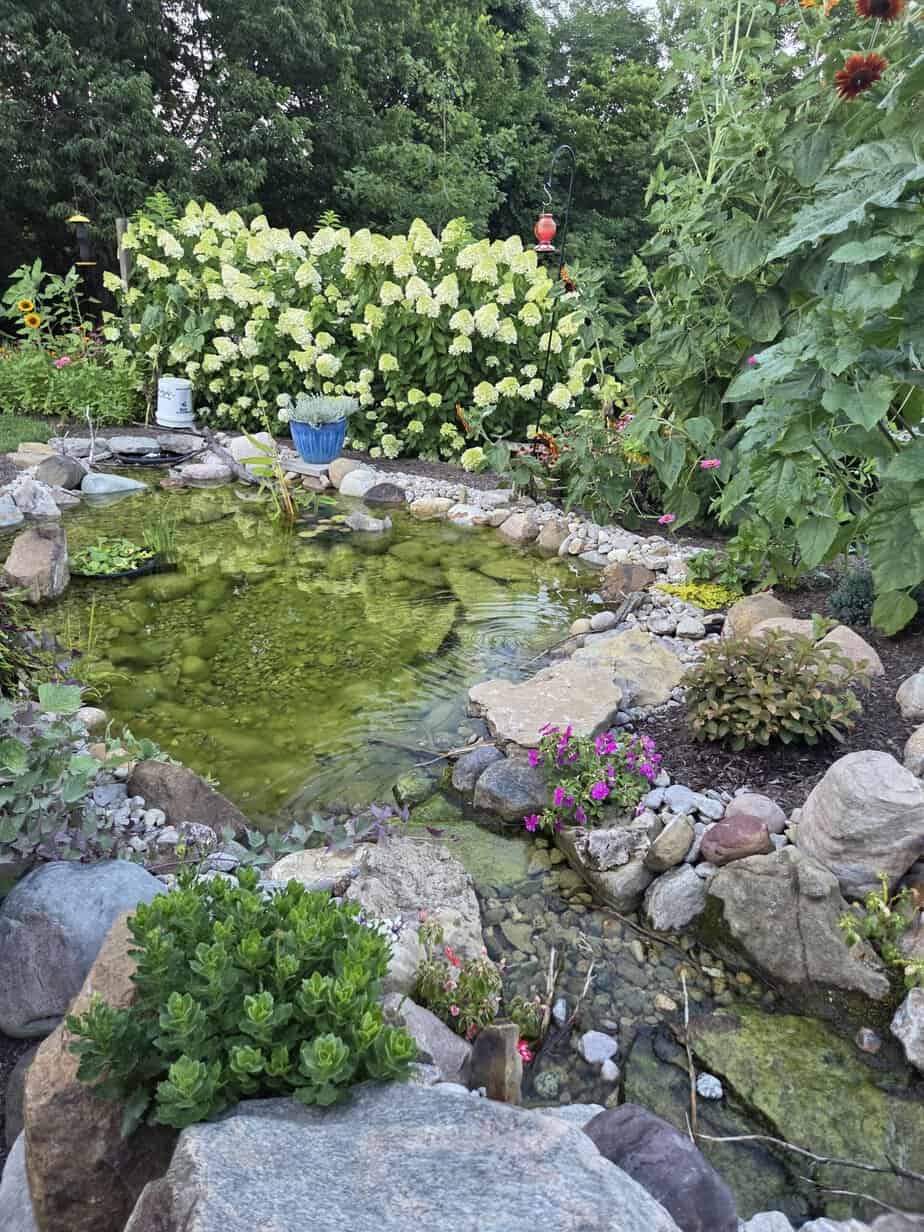
Matt and his wife already spent plenty of time in their backyard in Southern Indiana, USA. They enjoyed coffee there in the morning and cigars in the evening, but they both felt one thing was missing.
“We always said we just need some water to look at.”
There was just one problem: Matt assumed a backyard pond would cost more than he could justify.
His father and brother both had small ponds, and he could see how much they enjoyed them. Then, after one of those conversations that makes you wonder whether your phone really is listening, an Ozponds video appeared in his feed.
The pond that caught his attention was my courtyard pond.
“I totally fell in love with the design of your courtyard pond. I said to myself, ‘I can do this. This is the same concept as my aquarium.’”
That change—from ponds are too expensive to I can do this—was the beginning of Matt’s build.
Can You Build a Backyard Pond on a Budget?
Matt’s pond is a great example of how patience, reused materials and doing the work yourself can make a pond much more affordable.
He didn’t rush out and buy everything at once. He already had some boulders in his landscape from when he worked at a surface mine. He could source more rock from a creek on his property, and a friend supplied a barrel for the filter as well as access to another creek.
The remaining major items—liner, pump, hose and fittings—went into his Amazon cart.
Then he waited.
“I monitored the price for almost a year to get the best price. You would be surprised how much the price fluctuates.”
That is probably not the fastest way to build a pond, but it is a sensible lesson for anyone working within a tight budget. Matt reduced the cost by:
- reusing rocks he already owned
- sourcing suitable materials locally
- accepting a second-hand barrel for the filter
- completing the excavation and rock placement himself
- watching the prices of the components he did need to buy
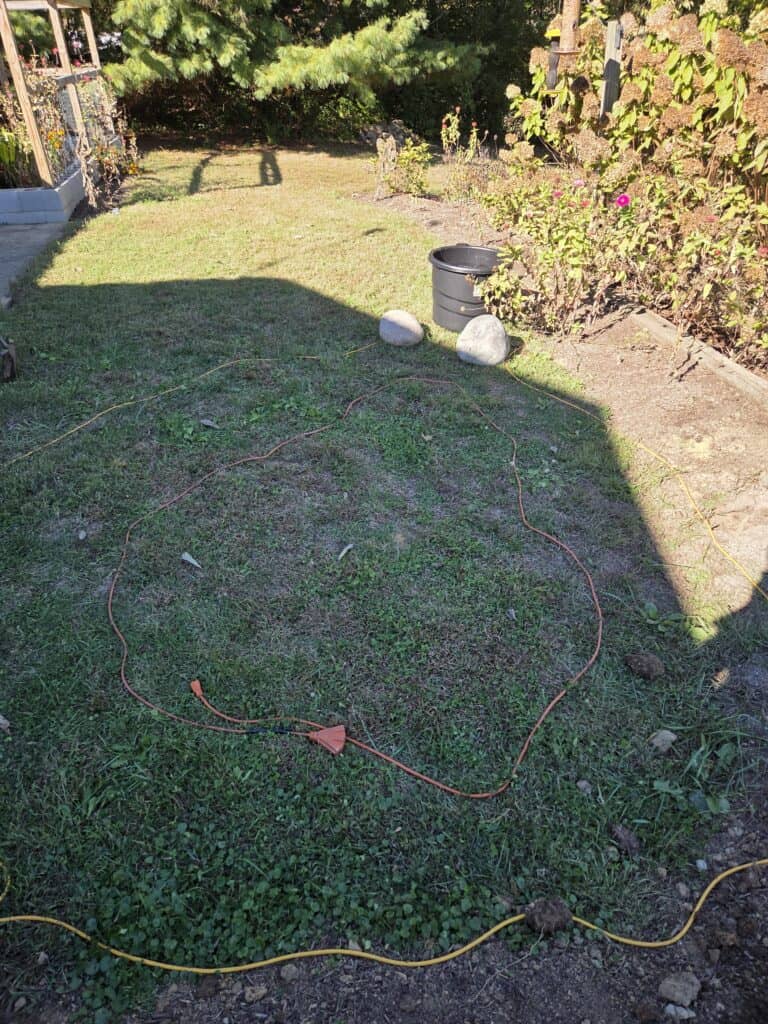
The starting point: the proposed pond shape marked out beside the patio.
How Much Work Was Involved in Building It?
Once Matt had collected the materials, the initial digging happened quickly.
“I dug it all myself in a weekend and really grinded on the rock placement.”
The photos show just how dramatically the space changed. An open patch of lawn beside the patio became a rock-edged pond with a stream, shallow margins and a separate barrel filter positioned behind the pond.
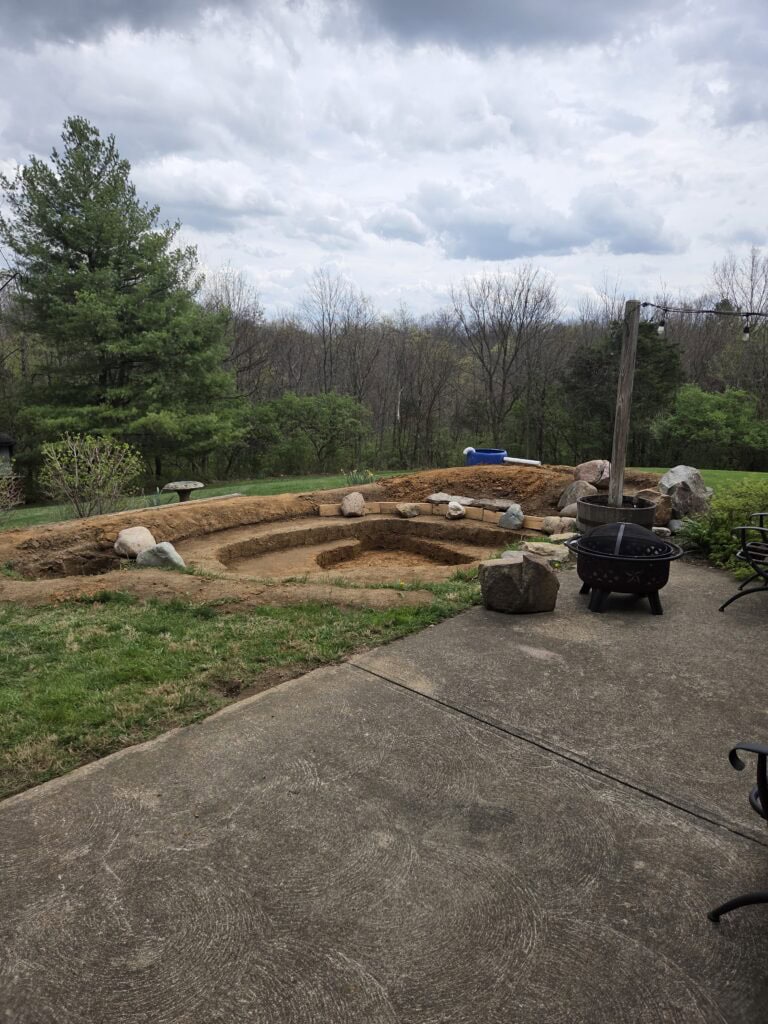
The pond taking shape. The filter barrel can be seen behind the excavated area.
Rock placement is often one of the most time-consuming parts of a natural-looking pond build. The rocks need to look as if they belong there, but they also have practical jobs: holding and disguising liner, forming edges, directing water and creating different depths and habitats.
Matt clearly put plenty of effort into this stage, and the finished pond looks settled into the garden rather than simply dropped onto the lawn.
Why Every Pond Needs a Planned Overflow
Matt’s first major lesson arrived almost immediately—and it came with several inches of rain.
“Once it was filled, we got a heavy rain, multiple inches. It overflowed and I realized I forgot to make a low spot.”
Every pond needs a deliberate place for excess water to escape.
Without a planned overflow or low point, heavy rain will choose the escape route for you. Water may run behind the liner, wash soil into the pond, flood nearby areas or spill over an edge you wanted to keep dry.
A simple overflow can be as basic as a deliberately lowered and reinforced section of the pond edge that sends water toward a safe drainage area. The right solution depends on the site, but the important part is deciding where the water should go before the pond fills during a storm.
Matt’s experience is a very useful reminder: when you mark out a pond, think not only about how water enters and circulates, but also where it will leave when nature adds more than the pond can hold.
What Can You Do if Your Pond Pump Is Too Powerful?
The next problem was the pump. Matt discovered that the one he had purchased was too large for the amount of flow he wanted through the barrel filter.
Rather than sending all that water through the filter, he split the line. One branch continued to the filter while the other returned directly to the pond.
“This works out as a jet to push water toward the pump.”
This gave him control over the filter flow and turned the excess pump capacity into useful pond circulation.
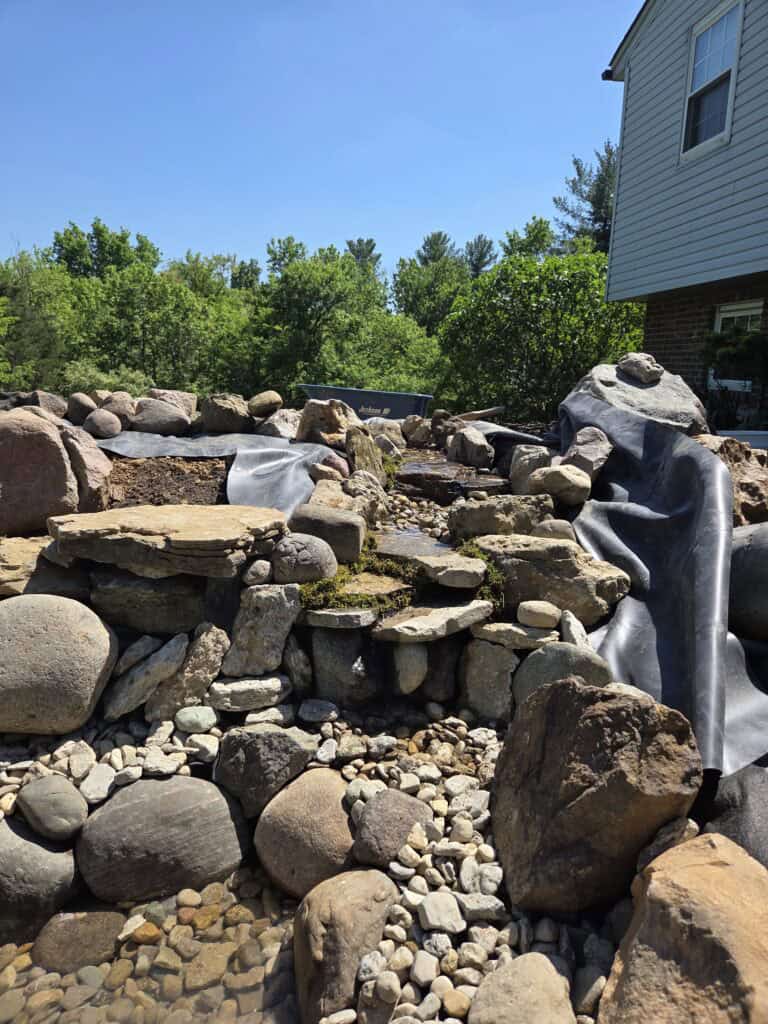
The stream return under construction. Matt split the pump flow so the filter received a manageable amount of water and the second return helped circulate the pond.
It is a clever practical adjustment. A well-positioned return jet can help reduce dead spots and move suspended debris toward the pump intake.
There are still a few things to keep in mind when using this approach:
- each branch needs enough control to balance the flow properly
- the plumbing must be sized to handle the pump’s output
- the filter should receive the flow it was designed for
- the pump should remain within the manufacturer’s operating requirements
Ideally, the pump, filter and plumbing are sized together before buying. But real DIY builds sometimes need adjustments, and Matt found a way to make the extra flow useful.
Is an Algae Outbreak Normal in a New Pond?
A couple of months after the pond was filled, Matt experienced an algae outbreak.
Because he already understood aquariums, he wasn’t completely surprised by the way a new aquatic system changes as it matures.
“Just like my aquarium, I had an algae outbreak a couple of months in as it found its cycle, but it has since cleared up with the help of some starter bacteria.”
New ponds commonly go through an unsettled stage. Algae can respond quickly to sunlight and available nutrients while the biofilm, plants and other organisms in the pond are still becoming established.
Matt used a starter bacteria product, and the water cleared as the pond matured. It is worth being careful about assigning the result to one product alone, because several things may have been changing at the same time. The important lesson is that an early algae bloom does not automatically mean the pond or filter has failed.
Good circulation, adequate filtration, sensible fish stocking, plant growth and patience all help a pond develop greater biological stability.
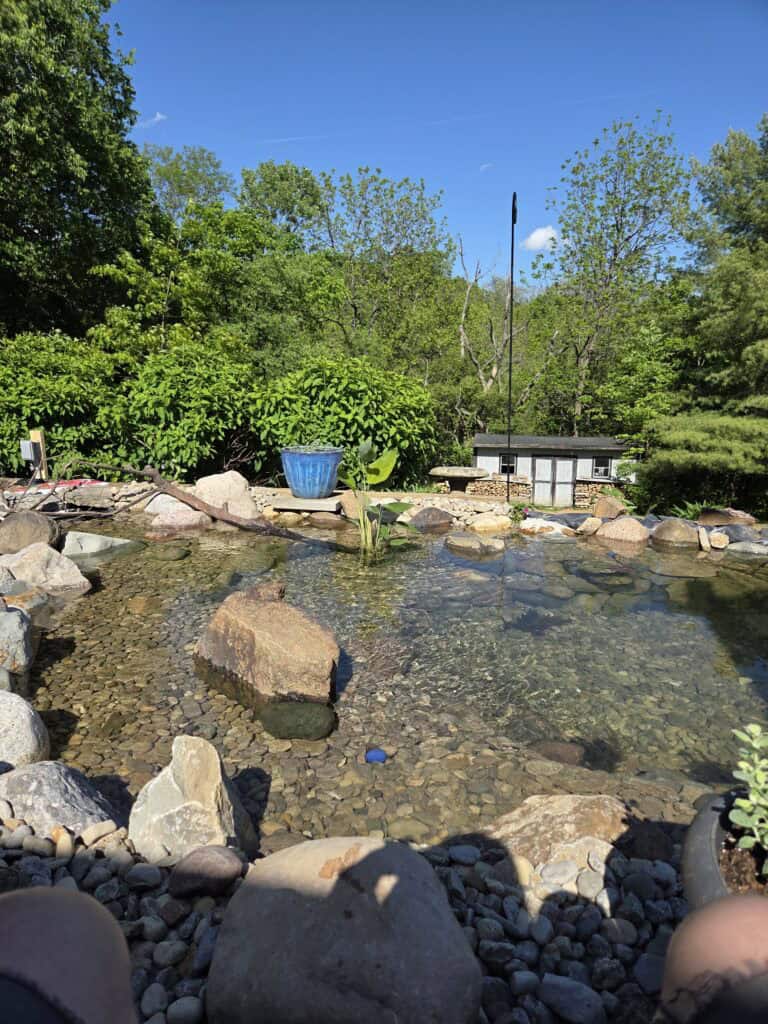
As the pond matured, the algae outbreak cleared and the water became clear.
How Did Matt Hide the Pond Equipment?
Pumps, air pumps, electrical outlets and plumbing are necessary, but they are rarely the parts of a pond anyone wants to look at.
Matt’s solution was to build what he calls a “little outhouse” to cover the outlet and air pump.
It is a small detail with a big visual benefit. The equipment remains close to the pond while being much less noticeable within the finished garden.
Any enclosure around electrical equipment or an air pump needs appropriate ventilation, weather protection and safe electrical installation. It must also remain easy to access for maintenance. Electrical work should comply with the rules that apply in your location and be completed by a qualified person where required.
Will Wildlife Find a New Backyard Pond?
For Matt and his wife, the pond was originally about having water to look at. It has since become much more than that.
“We really enjoy all the wildlife using the pond. Birds take baths in the stream. We have five or six frogs and have seen dragonfly and damselfly larvae emerging from it.”
The shallow stream gives birds an inviting place to bathe. The rock edges, aquatic plants and different water depths create more opportunities for animals to drink, shelter and reproduce.
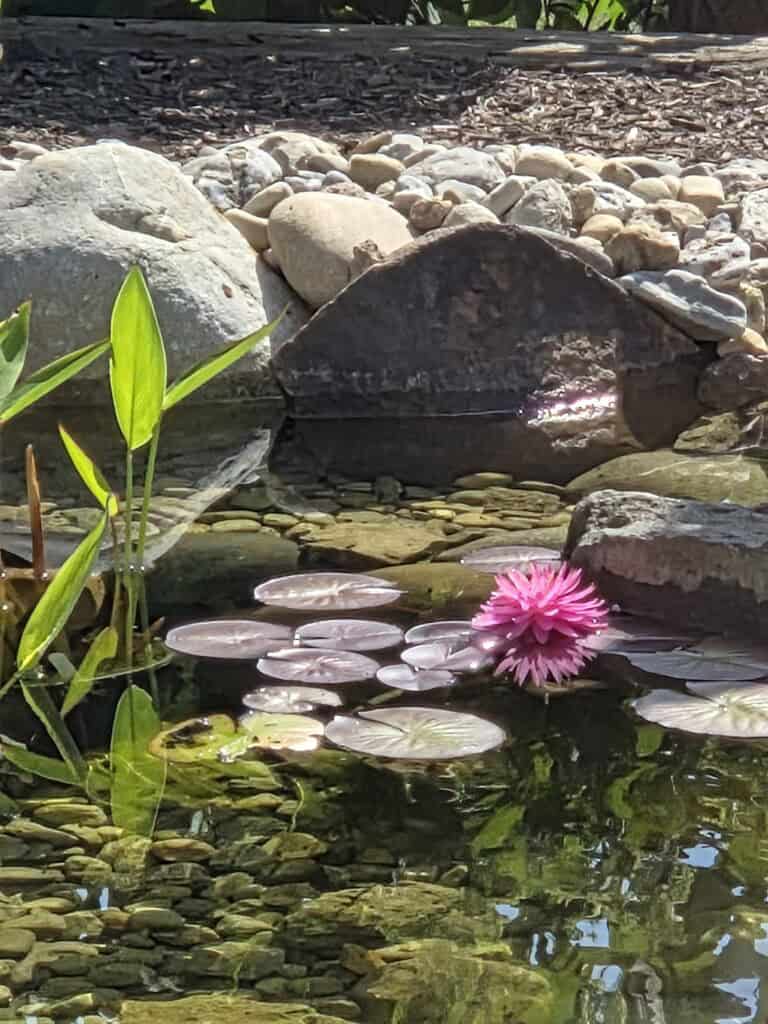
Aquatic plants, clear water and sheltered spaces have helped turn the pond into useful backyard habitat.
Dragonflies and damselflies spend much of their lives underwater as larvae before climbing out and emerging as winged adults. Seeing them complete that process around a home pond is a wonderful sign that the pond has become part of the local ecosystem.
What Can We Learn From Matt’s DIY Pond?
Matt’s build offers several useful lessons for anyone planning a pond:
- You don’t need to buy every material new. Reused rocks and a second-hand filter container can reduce the cost considerably.
- Patience can save money. Monitoring prices for the components you need may be worthwhile when the project is not urgent.
- Plan a safe overflow. Decide exactly where excess rainwater will leave the pond.
- Size the pump, filter and plumbing as one system. Too much flow can create problems, although a controlled bypass may turn surplus flow into useful circulation.
- Don’t panic when a new pond changes. Young ponds take time to mature, and an early algae outbreak does not necessarily mean the design has failed.
- Wildlife may arrive surprisingly quickly. Shallow moving water, plants, stones and sheltered areas can make a pond useful to many different animals.
The view Matt and his wife created for their morning coffees and evenings in the backyard.
Want to Build Something Similar?
If Matt’s pond has you thinking, I could do this, that is exactly the sort of confidence a good plan should provide.
The Pond Building Blueprint is the step-by-step system I use to plan my own ponds. It helps you work through pond volume, filtration, pump sizing, circulation, plumbing, water features and the basic ecology that helps keep pond water clean, clear and healthy—without spending a fortune.
A Backyard Pond Matt Never Thought He Could Build
The most important part of this pond isn’t the barrel filter, the carefully placed rocks or even the clear water. It is what the pond has added to Matt and his wife’s everyday life.
They wanted some water to look at while they enjoyed their backyard. Now they have a living pond where birds bathe, frogs gather and dragonflies and damselflies emerge.
Matt finished his message with words that genuinely mean a lot to me:
“From the bottom of my heart, Kev, thank you. I never thought I could create this, but you gave me the inspiration and confidence to do so.”
Thank you, Matt, for sharing your story and photos. You did the hard work—and you created something you and your wife can enjoy with that morning coffee or evening cigar for many years to come.
Design Your Pond Using The Same System I Use
- A simple system that has helped people around the world design clear, low-maintenance ponds without spending a fortune.
- Includes access to the Private Ozponds community and Virtual Kev, a tool that helps you plan your pond step-by-step.
Frequently Asked Questions
Can you build a DIY backyard pond cheaply?
Yes. Matt reduced the cost of his pond by reusing boulders, sourcing rocks locally, accepting a second-hand barrel for the filter, doing the excavation himself and waiting for better prices on the liner, pump, hose and fittings. The final cost will depend on the pond’s size, local material prices and how much work you do yourself.
Does a backyard pond need an overflow?
Yes. A pond needs a planned low point or overflow that directs excess rainwater to a safe location. Otherwise, heavy rain may force water over an unsuitable edge, potentially washing soil into the pond or causing local flooding.
What should you do if a pond pump is too powerful for the filter?
Depending on the pump and plumbing design, some of the flow may be diverted through a controlled bypass and returned directly to the pond. Matt used the second return as a circulation jet. The filter still needs the correct flow, and the plumbing and pump must remain within their safe operating requirements.
Is algae normal in a newly built pond?
An algae outbreak is common while a new pond is maturing. Sunlight and available nutrients can support rapid algae growth before plants, biofilm and other organisms become fully established. Adequate filtration, circulation, sensible stocking and time can help the system stabilise.
Will frogs, birds and dragonflies find a new pond?
They often do when the pond is accessible and provides suitable habitat. Matt’s pond attracted bathing birds, five or six frogs, and dragonfly and damselfly larvae. Shallow water, stones, plants and sheltered spaces can all make a pond more useful to wildlife.
About to build a pond… or already have one?
Sign up for my email list and I’ll send you DIY-friendly pond tips, along with a few helpful tools like calculators, gear recommendations, and more.