
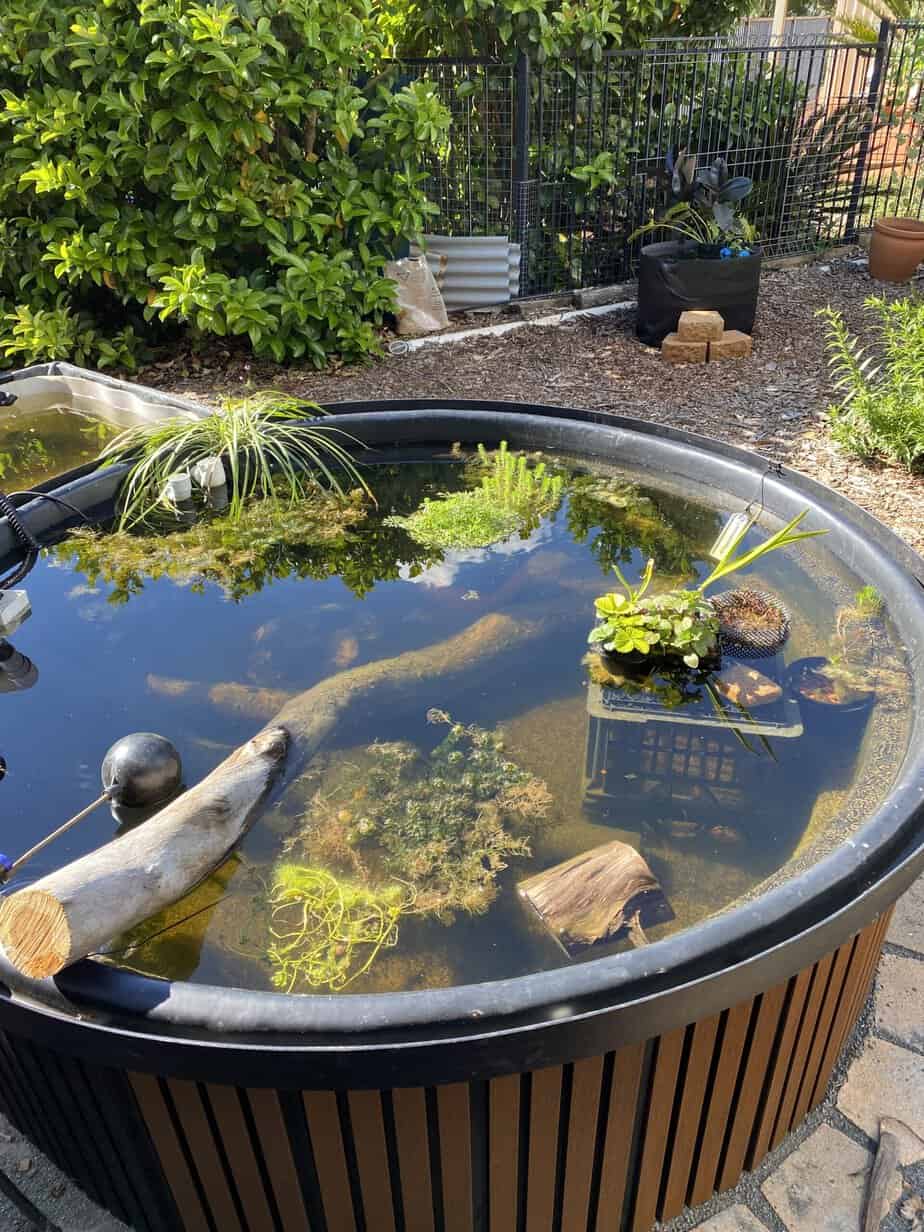
A simple DIY pond in Toowoomba, Queensland — built from a polyethylene pool, an old rainwater tank and a bit of determination.
You don’t need to excavate a huge hole or move tonnes of rock to build an interesting backyard pond.
Judy, from Toowoomba in Queensland, Australia, built this 1,500-litre above-ground pond largely by herself.
She already had plenty of experience with aquaponics, but this was her first pond.
And one of the things I really like about Judy’s build is that she worked within her limitations rather than trying to copy somebody else’s pond.
No enormous rocks.
No major excavation.
No expensive purpose-built pond shell.
Instead, she used a polyethylene above-ground pool for the pond, an old rainwater tank for the bog filter, lightweight expanded clay as filter media, readily available plumbing fittings and recycled plants.
The result is a backyard ecosystem that Judy can watch from her dining room table.
From Aquaponics to Her First Backyard Pond
Judy told me:
“I have lots of Aquaponics experience, but no pond experience.”
Although aquaponics had taught her plenty about growing plants in water, a pond was a different ecosystem.
She used my Pond Building Blueprint to help plan the system before putting everything together.
In Judy’s words:
“The blueprint was a great help with sizing pumps and bog filter sizes and helping me understand the pond ecosystem.”
That distinction between an aquaponics system and a pond ended up being one of the things she enjoyed most about the project.
More on that shortly.
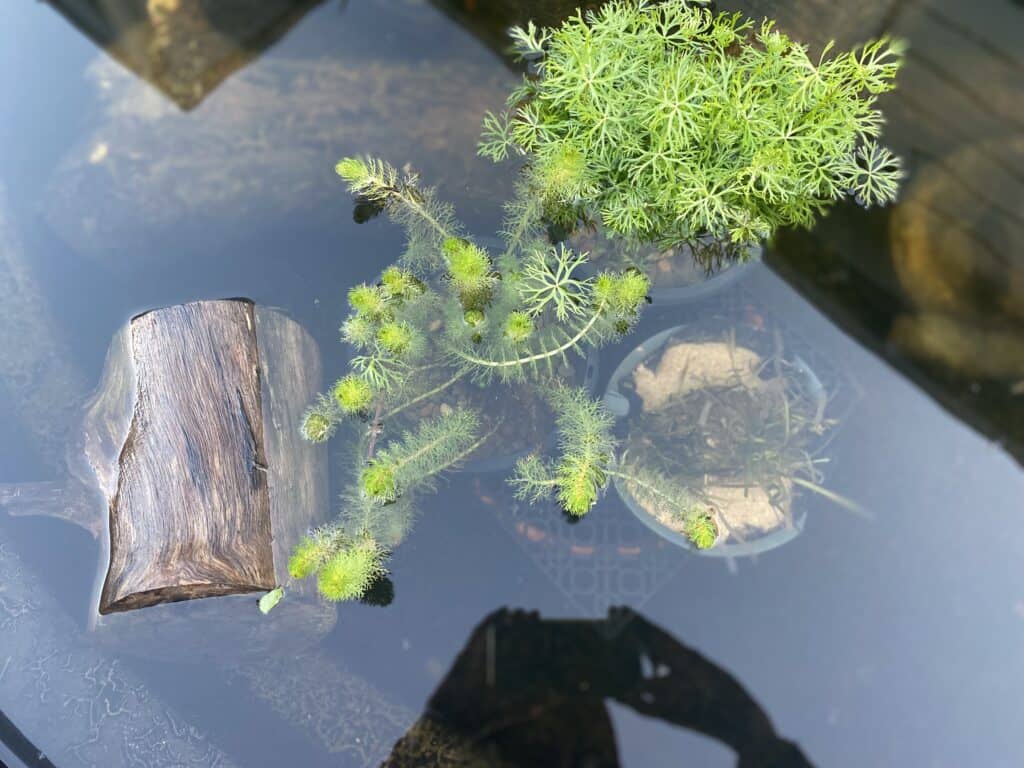
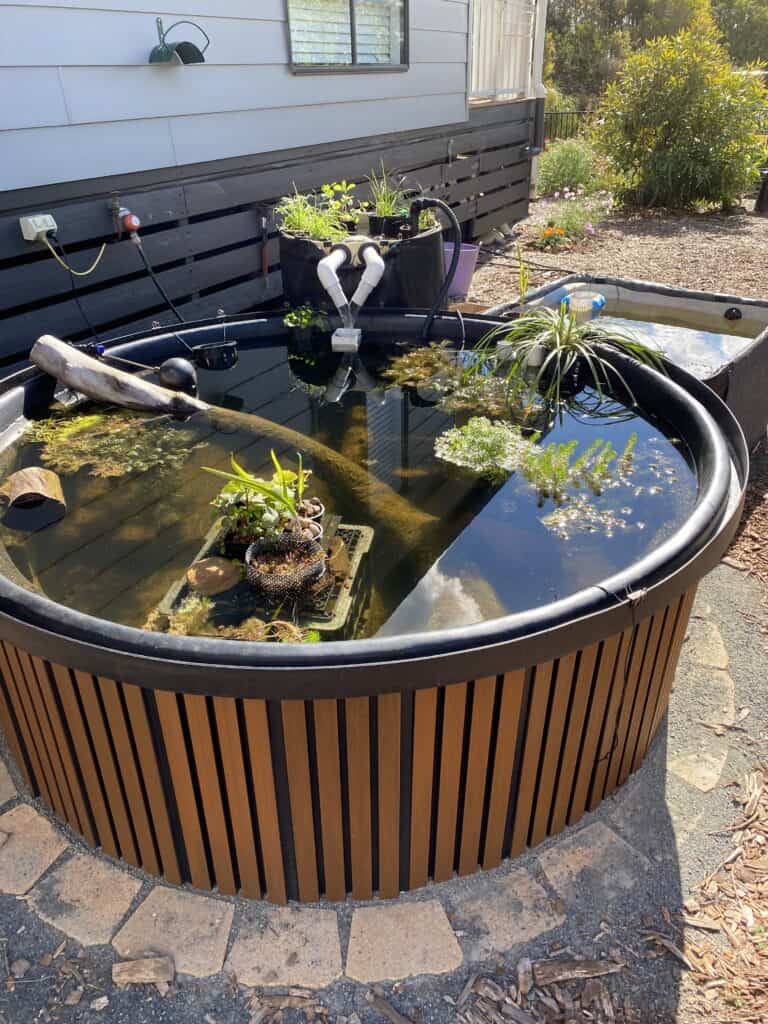
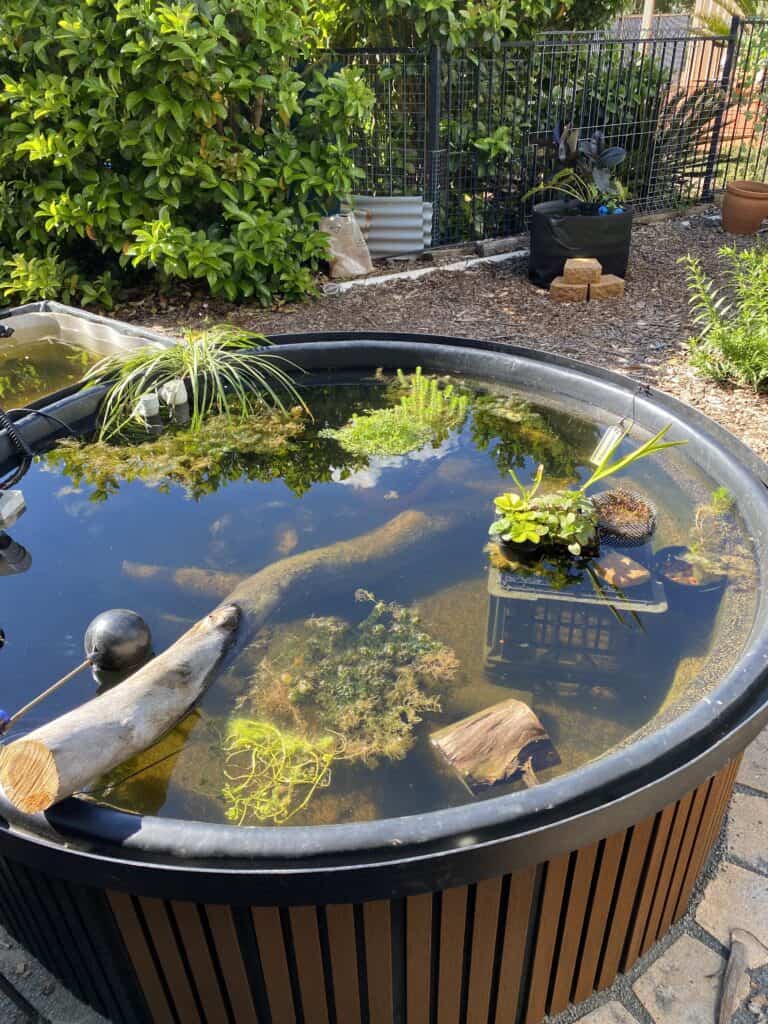
The Pond: A 1,500 Litre Polyethylene Pool
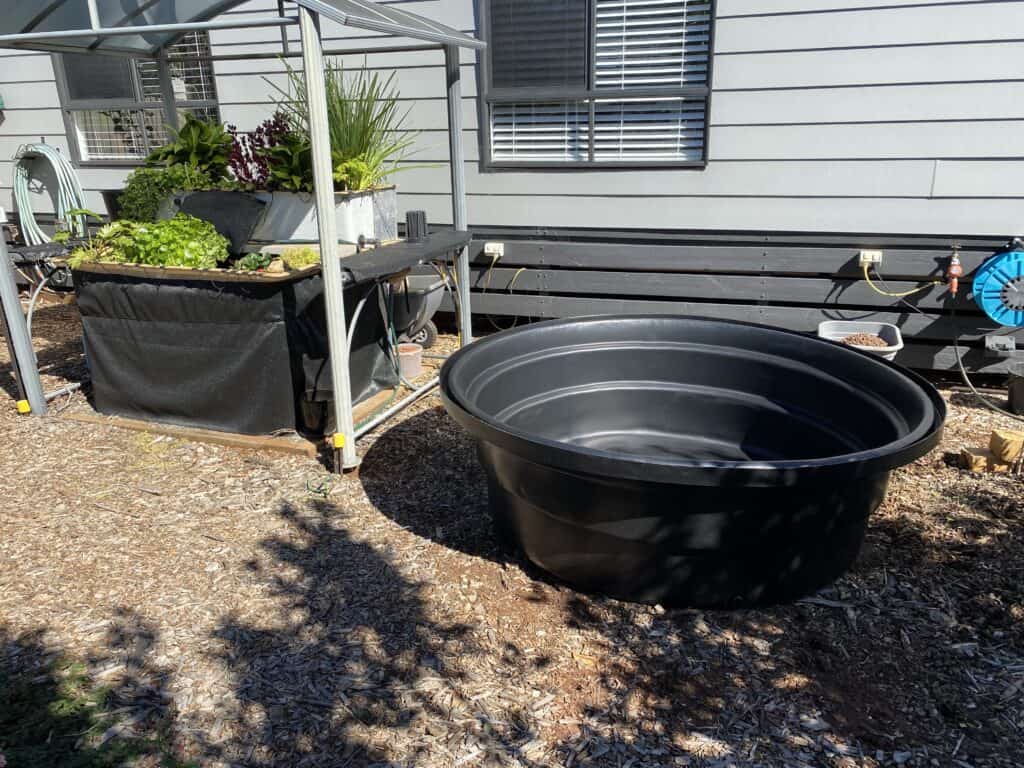
Rather than constructing the pond from liner or digging a large hole, Judy used a 1,500 L polyethylene above-ground splasher pool from Polyworld.
Polyworld gave her a piece of advice that she now really appreciates:
“Start small and learn.”
For someone building their first pond, I think there’s a lot to be said for that.
A smaller pond lets you learn how water circulation, filtration, plants, algae, fish and all the other parts of a pond ecosystem interact without committing to a massive construction project.
And an above-ground pond can remove a lot of the physical work associated with excavation.
Did Judy need to dig anything?
Only a relatively shallow area for the base.
Judy used crusher dust beneath the pond and did most of the work herself.
As she puts it:
“The only time I needed help (being a skinny old girl of 62) was with digging the hole for the crusher dust base for the pond.”
Even then, she moved the crusher dust herself.
“I moved the crusher dust myself a few buckets every day. It took me a fortnight.”
I really like this part of Judy’s story.
There’s sometimes an assumption that building a pond means hiring machinery, digging a giant hole and wrestling enormous boulders into position.
It doesn’t have to.
Judy simply designed the pond around what she could realistically manage.
Turning an Old Rainwater Tank Into a Bog Filter
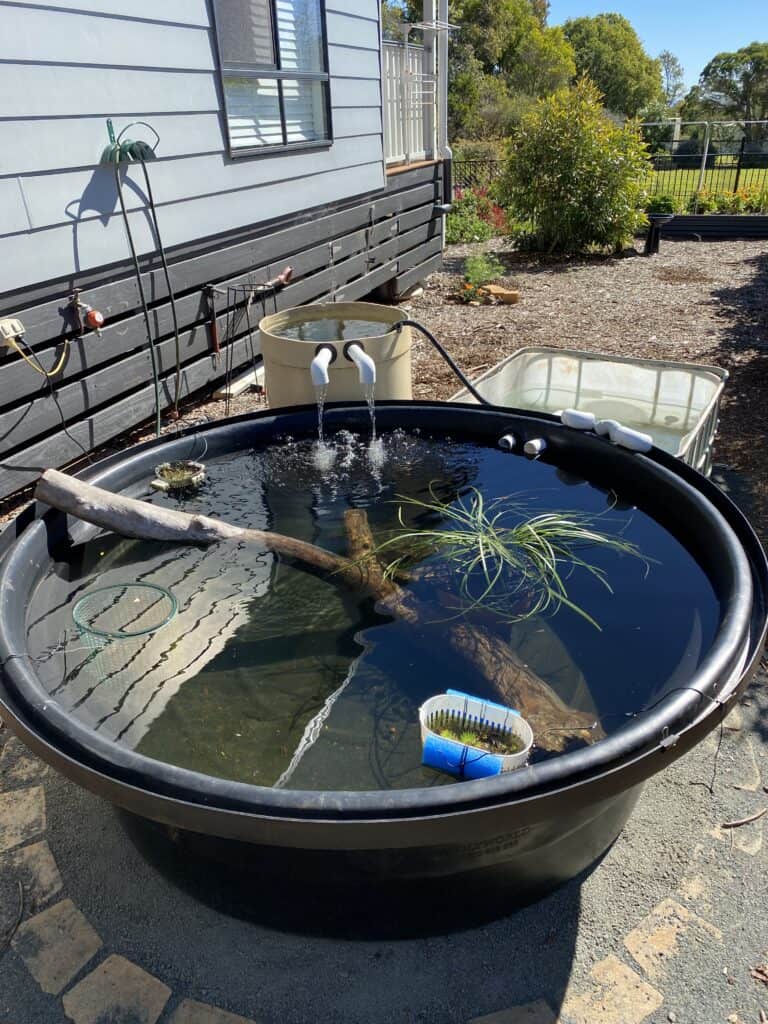
For filtration, Judy reused an old 250 L rainwater tank as a bog filter.
That gives her a bog filter roughly equivalent to 17% of the pond volume, before allowing for displacement from the filter media.
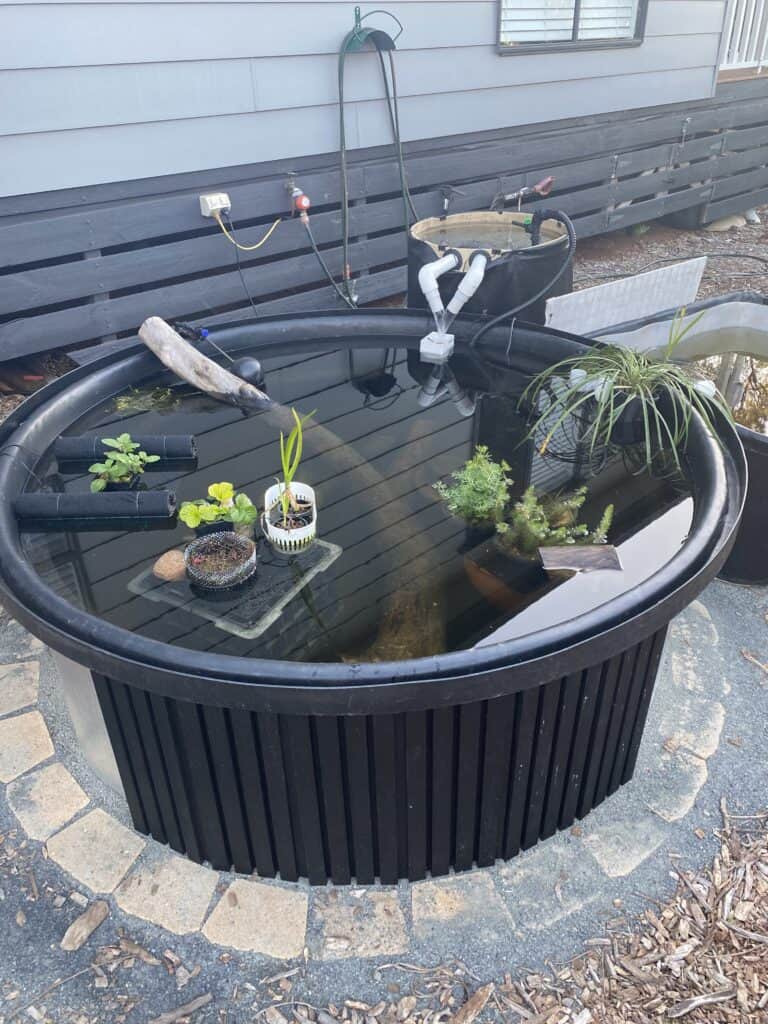
Water is pumped from the pond into the bog and then returns through the two outlets you can see in the photos.
A bog filter provides both biological filtration and a growing area for plants.
As water moves through the media, the enormous amount of available surface area becomes colonised by microorganisms. Plants, algae and the wider microbial community can then make use of nutrients circulating through the system.
For Judy, it also provided a convenient way to reuse something she already owned.
Lightweight Clay Pebbles Instead of Heavy Gravel
A conventional bog filter is often filled with gravel or similar stone.
That wasn’t particularly practical for Judy.
“Because I’m a skinny old girl lifting heavy rocks and pebbles wasn’t an option so I went for the Light Expanded Clay Aggregate.”
Light Expanded Clay Aggregate, often shortened to LECA, consists of lightweight fired clay pebbles.
Judy found that it cost more than some heavier alternatives, but there was an obvious benefit:
“It was a bit expensive but easy to work with.”
And that’s an important point when designing your own pond.
The “best” material isn’t necessarily the one somebody else uses.
Weight, availability, cost, access and your own physical ability all matter.
DIY Pond Plumbing and Pump
Judy kept the plumbing relatively simple.
“All the plumbing bits and pieces came from Bunnings. The pump came from Rock around the Block.”
The pump sends pond water up into the bog filter, with gravity returning the filtered water back to the pond.
Getting pump sizing, pipe sizing and filter flow reasonably close is important.
A pump isn’t just about moving a certain number of litres per hour on the box. Flow falls as the pump has to lift water and push it through plumbing, bends and restrictions.
That was one of the reasons Judy found the sizing information in the Pond Building Blueprint useful during the planning stage.
Making an Above-Ground Pond Look Good
One of the challenges with a polyethylene pool or stock-tank style pond is that it can still look like… well… a big plastic container.
Judy came up with a simple solution.
“I wrapped insulation around the pool and clad it with Ecoboards to make it look pretty.”
And it made a huge difference.
The later photos show how much the timber-look vertical cladding changes the appearance of the pond.
It also illustrates something worth remembering when planning an above-ground pond:
The container doesn’t necessarily have to be attractive. You can build the visual finish around it.
Judy’s brother also found the tree trunk and branch used inside the pond at his workplace.
They add structure and make the pond feel considerably more natural without requiring piles of heavy rock.
Where Did All the Pond Plants Come From?
Judy didn’t go out and buy an elaborate collection of specialist pond plants.
Instead:
“The plants came from Bunnings or neighbours or simply recycled from my old Aquaponics system.”
Again, I think that’s a useful lesson.
A pond can develop gradually.
Plants can be divided, propagated, swapped with friends and neighbours, or moved from other aquatic systems where appropriate.
You don’t have to create the finished ecosystem on day one.
The Most Interesting Part: Wildlife Started Arriving
This is probably my favourite part of Judy’s story.
Her aquaponics system grew plants and supported fish, but her pond quickly began attracting and supporting other organisms.
Judy says:
“I love seeing living creatures find their way into my pond which they never did in the Aquaponics system.”
And quite a collection has turned up.
She has observed:
- dragonflies
- water beetles
- shrimp
- amphipods
- bryozoan zooids
- cone snails
- ramshorn snails
Some arrived completely uninvited.
“Dragonflies, water beetles, shrimp, amphipods, bryozoan zooids, cone snails and ramshorn snails have all hitchhiked into my pond somehow or other.”
The bryozoans were particularly interesting.
Judy describes them as:
“The little clear jelly like blobs living on the pond liner and pump.”
She has even been using AI to help identify some of the strange new inhabitants:
“AI is a wonderful help in identifying stuff.”
This is one of the things I find fascinating about ponds.
Build a body of water, give it some structure and plants, and eventually you aren’t the only one deciding what lives there.
The ecosystem starts assembling itself.
What Happened When the Fish Were Added?
Judy also experienced something that can worry new pond owners.
The day after she added her fish:
“The water went gloomy and murky looking.”
But she didn’t immediately start throwing treatments into the water or rebuilding the filtration system.
A couple of days later:
“It cleared and the fish are visible again.”
New ponds change.
Adding fish changes them again.
Bacteria populations adjust, fine particles move around, algae responds to available nutrients and the biological system gradually develops.
Not every temporary change in water clarity means something has gone wrong.
How Much Did Judy’s 1,500 Litre Pond Cost?
Judy estimates the entire pond cost a little over A$2,000.
That included:
- the 1,500 L polyethylene pool
- crusher dust
- pond pump
- plumbing
- insulation
- decorative boards
- plants
- native fish
- expanded clay filter media
She says:
“I think it cost me a little over $2000 all up for the pool, crusher dust, pump, plumbing, insulation, boards, plants, native fish and clay pebbles.”
Obviously, costs will vary enormously depending on where you live, what materials you already have, what you can recycle and how elaborate you make the finished pond.
But Judy’s build gives you a useful real-world example of what an above-ground DIY pond can cost.
A Pond She Can Enjoy From the Dining Room
Perhaps the most important design decision Judy made had nothing to do with pumps, plumbing or filters.
It’s where she put the pond.
“I can see it from my dining room table at breakfast and lunch which is a real treat.”
That might sound like a small detail, but I think pond location is hugely underrated.
A beautiful pond hidden in a corner of the garden you rarely visit doesn’t necessarily give you as much enjoyment as a simple pond positioned somewhere you see every day.
Judy can sit inside eating breakfast and watch her fish, plants, insects and all the other organisms that have made the pond home.
And she’s still discovering things.
“I just love watching and learning about it.”
I reckon that’s about as good a measure of a successful pond as any.
Judy’s Advice for Someone Considering Their First Pond
Judy’s experience demonstrates a few things particularly well.
You don’t necessarily need a large excavation. You don’t need heavy rock. You don’t need purpose-built pond filtration equipment for every component, and you certainly don’t need to build your dream pond all at once.
Start with something manageable.
Understand the basic principles.
Size the filtration and circulation appropriately.
And then allow the pond time to develop.
Judy summed up her experience with the Blueprint like this:
“Thanks Kev for your videos and the blueprint was definitely very helpful and worth every cent.”
Thank you, Judy, for sharing the photos and the story.
I especially love seeing how different the finished pond looks compared with that first photo of the empty polyethylene pool sitting on the ground.
Want to Build Something Similar?
If you’re planning your own pond, the Pond Building Blueprint is the step-by-step system I use to plan my ponds.
It covers things such as pond volume, bog filter sizing, pump sizing, circulation, plumbing and the basic pond ecosystem — the same information Judy used while working out her system.
Need a pond pump or pond equipment in Australia?
Judy purchased her pump from Matt at Rock Around the Block, who I’ve worked with for years and regularly recommend to Australian pond builders.
If you’re buying from Rock Around the Block, you can use the discount code OZPONDS for 5% off.
About to build a pond… or already have one?
Sign up for my email list and I’ll send you DIY-friendly pond tips, along with a few helpful tools like calculators, gear recommendations, and more.
Frequently Asked Questions
Can you make a pond from an above-ground pool?
Yes. Judy used a 1,500 L polyethylene above-ground splasher pool as the shell for her pond. Suitable containers need to be strong enough to hold the water permanently and should be installed on a stable, well-prepared base.
Can a pond be built without digging a large hole?
Yes. Above-ground and partially raised ponds can dramatically reduce the amount of excavation required. Judy only needed to prepare the crusher-dust base beneath her pond.
Can an old rainwater tank be used as a bog filter?
Potentially, yes. Judy converted an old 250 L rainwater tank into the bog filter for her 1,500 L pond. The filter still needs suitable water distribution, media, flow and an adequately sized gravity return.
Can LECA clay pebbles be used in a bog filter?
Light Expanded Clay Aggregate can provide biological surface area and is much lighter to handle than rock or gravel. It is generally more expensive, and its suitability will depend on how the particular bog filter is designed.
How big was the bog filter on Judy’s pond?
Judy used a 250 L rainwater tank with a 1,500 L pond. The physical filter container therefore represents about 17% of the pond’s stated volume, although the actual water volume inside the bog is lower once filter media is added.
How much did Judy’s DIY pond cost?
Judy estimates she spent a little over A$2,000 in total, including the pond shell, base preparation, pump, plumbing, insulation, decorative cladding, plants, native fish and expanded clay filter media.
Will wildlife find a new backyard pond?
Very often it will. Judy has observed dragonflies, water beetles, shrimp, amphipods, bryozoans and several types of snail appearing in her pond without deliberately introducing all of them.