
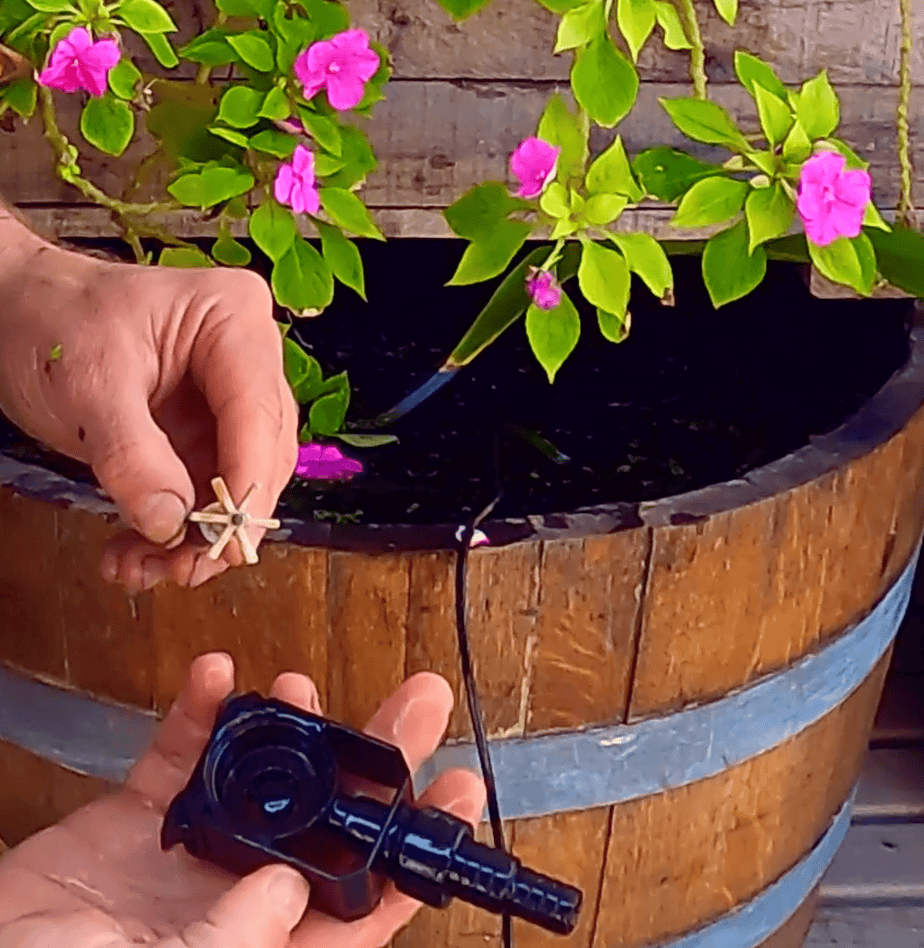
If your pond pump has stopped working, don’t rush out and buy a new one.
Often, the problem is simply a blocked or dirty impeller. Unplugging the pump, removing the impeller and rinsing away accumulated dirt may be all that’s needed to get it running again.
G’day, I’m Kev from Ozponds, and I help people build and maintain their ponds without spending a fortune.
Recently, I walked over to my little wine barrel pond to feed the fish and noticed the water wasn’t moving.
The pump had stopped working.
Now, this little pond and its pump are about six years old, so you might think it’s time for a replacement.
But I had a feeling the pump wasn’t broken at all.
And as it turned out, I was right!
A simple clean was all it needed.
Here’s how I fixed it, and how you can try doing the same with your own submersible pond pump.
Why Has My Pond Pump Stopped Working?
There are several reasons a pond pump might stop working, but one of the first things I’d check is the impeller.
The impeller is the little spinning component inside the pump that moves the water.
Over time, algae, fish waste, sediment, leaves and other debris can accumulate inside the pump.
Eventually, this buildup can restrict or even stop the impeller from turning.
A pump that isn’t moving water isn’t necessarily a broken pump. It might just need cleaning.
Of course, there are other possibilities, including electrical problems, a damaged impeller, blocked plumbing or a worn-out motor.
But before spending money on a replacement, I’d start with the simple things.
How to Clean a Pond Pump Impeller: Step by Step
Most small submersible pond pumps use a similar basic arrangement, although the way they come apart varies between models.
Here’s what I did to get my six-year-old pond pump running again.
Step 1: Unplug the Pond Pump
First things first, disconnect the pump from the electrical supply.
Never attempt to pull apart or service a pump while it’s connected to power.
Once it’s safely unplugged, remove it from the pond.
Don’t lift it using the electrical cable. Grab the pump body or use its handle.
If the power cable is damaged or you suspect an electrical fault, don’t attempt to repair the sealed motor yourself.
Step 2: Remove the Pump’s Protective Cage
Most submersible pond pumps have a plastic cage or cover that protects the impeller from larger debris.
On some pumps, the cage simply clips off.
Others have a base plate or housing that needs to be removed first.
My little pump was relatively easy to pull apart.
Once I’d removed the outer cage, I twisted off the cover that protects the impeller.
And straight away, I could see the problem.
There was quite a lot of gunk inside!
Step 3: Carefully Remove the Impeller
The impeller on many small pond pumps is magnetic.
Once you remove the housing, the impeller assembly can usually be pulled out gently.
You might feel a bit of resistance from the magnet. That’s normal.
One important thing to watch for is the impeller shaft.
Some pumps have a thin ceramic shaft with small rubber bushings or stoppers at each end.
These little parts are important because they help keep the impeller correctly positioned.
Don’t lose the rubber stoppers, and be very careful not to bend or break the shaft.
Ceramic shafts can be quite fragile.
Not every pump has a removable shaft, so follow the instructions for your particular model rather than forcing anything apart.
Step 4: Clean the Impeller and Housing
With the impeller removed, you can clean the accumulated muck from both the impeller and the chamber it sits inside.
For my little barrel pond pump, I just used a bucket of water.
I gave the impeller a good rinse and washed out the cavity where it sits.
There was plenty of accumulated sludge in there.
You can also use a soft brush to remove stubborn deposits.
Avoid soap, detergent or household cleaning chemicals. We don’t want any of those residues finding their way back into the pond.
The goal is simply to remove the muck so the impeller can rotate freely again.
Step 5: Reassemble the Pump
Once everything is clean, carefully put the pump back together.
Make sure the impeller and shaft are seated correctly.
If your pump has rubber or plastic bushings on the ends of the shaft, check that they’re back in their proper positions.
If the shaft is bent, broken or wobbling around, cleaning alone probably won’t solve the problem.
Replace the impeller cover and protective cage, making sure everything fits properly.
Step 6: Put the Pump Back in the Water and Test It
Now for the moment of truth!
Return the pump to the pond, ensure it’s properly submerged, and reconnect the power.
Don’t run a water-cooled submersible pump dry.
In my case, I plugged the pump back in and…
Bob’s your uncle!
It started working again.
No new pump. No expensive repairs.
Just a bit of cleaning.
Not bad for a little pump that’s been running for six years!
What if Your Pond Pump Still Isn’t Working?
If cleaning the impeller doesn’t fix the problem, there are a few other things worth checking.
Pump is completely silent: Check the power supply, controller and electrical connections. If these are working correctly, the motor may have failed.
Pump hums but doesn’t move water: The impeller may be jammed, damaged or unable to spin freely.
Pump runs but has weak flow: Check for a blocked intake cage, dirty sponge, clogged tubing or other restrictions.
Pump stops and starts: This could indicate blockages, overheating or a built-in pump protection feature.
Pump trips the safety switch: This could indicate an electrical fault. Disconnect the pump and have the problem assessed by a qualified professional.
Some pumps have replaceable impeller assemblies, which may be considerably cheaper than buying an entirely new pump.
If the electrical cable or sealed motor is damaged, however, replacement or professional assessment may be necessary.
Never repeatedly reset a tripping safety switch or continue operating a pump you suspect has an electrical fault.
How I Stop My Pond Pumps From Clogging
One thing I really dislike is constantly pulling pumps out of ponds to clean them.
I’m a big fan of low-maintenance ponds.
In my little wine barrel pond, I’ve actually placed the pump inside a small pot.
There’s rock and pebble in the bottom and a sponge over the top.
This creates a simple pre-filter.
Water can pass through the sponge, but much of the larger debris is prevented from reaching the pump.
It also helps stop baby fish from being sucked into the pump.
In fact, I hadn’t touched this little pump in years!
Of course, after all that time, the sponge and the rock and pebble inside the pot were pretty filthy.
So, while I had everything apart, I gave those a clean as well.
If you’re using sponge as biological filter media, it’s best to rinse it gently in pond water to help preserve the beneficial bacteria.
Then I reconnected the tubing leading to the little bog filter above the pond and turned everything back on.
Everything was working beautifully again.
Design Your Pond Using The Same System I Use
- A simple system that has helped people around the world design clear, low-maintenance ponds without spending a fortune.
- Includes access to the Private Ozponds community and Virtual Kev, a tool that helps you plan your pond step-by-step.
Can You Prevent a Pond Pump From Clogging?
You can’t guarantee a pump will never clog, but you can certainly reduce how often it happens.
Keeping large debris away from the intake is a great start.
Depending on the pond, you could use a sponge pre-filter, protective cage, pump vault, skimmer or intake bay.
All of these approaches have advantages and disadvantages.
The important thing is choosing something appropriate for your pond and making sure it’s easy to clean.
On my larger ponds, I often place the pumps inside skimmers or intake bays to reduce the amount of debris reaching them.
I find a little planning can make an enormous difference to the amount of maintenance a pond needs.
How Often Should You Clean a Pond Pump?
There’s no single answer because every pond is different.
A little barrel pond with a few small fish will produce a different amount of waste from a heavily stocked koi pond or a pond surrounded by deciduous trees.
The pump design and pre-filtration also make a big difference.
Rather than waiting until your pump stops completely, keep an eye on the water flow.
If you notice your waterfall slowing down or less water coming through your filter, it’s worth checking for blockages.
Inspect and clean your pump according to the manufacturer’s maintenance recommendations.
I probably left my little barrel pond pump alone for longer than I should have, but it does demonstrate how effective even a simple pre-filter can be.
Frequently Asked Questions About Pond Pumps
Why Is My Pond Pump Running but Not Pumping Water?
A blocked intake, dirty impeller, clogged hose or trapped air could be restricting the water flow. Start by checking the intake and plumbing, then disconnect the pump from power and inspect the impeller.
Can a Blocked Impeller Stop a Pond Pump Completely?
Yes. Debris or sludge can jam the impeller and prevent it from turning. Cleaning the impeller and its housing may restore operation if no components have been damaged.
Can You Fix a Pond Pump Without Replacing It?
Sometimes. If the problem is accumulated dirt or debris, cleaning may be all that’s required. Some pumps also have replaceable impellers and shafts. However, a damaged sealed motor or electrical cable generally requires replacement or professional assessment.
How Do You Clean a Pond Pump Without Damaging It?
Always disconnect the power first. Remove the protective housing according to the manufacturer’s instructions, carefully clean the impeller and chamber with water and a soft brush, and reassemble the components correctly. Avoid harsh chemicals and forcing delicate components apart.
Should a Pond Pump Run Continuously?
For most of my fish ponds, I prefer continuous circulation and filtration. This helps maintain water movement and supports biological filtration. However, the appropriate operating schedule depends on the pond’s design, inhabitants and filtration system.
Want to Spend Less Time Maintaining Your Pond?
One of the main reasons I started Ozponds was to help people build and maintain beautiful ponds without spending a fortune.
Fixing a dirty pump is a perfect example.
Sometimes the solution is much simpler and cheaper than you might think.
And the same principle applies to designing an entire pond.
If you understand how water moves, how filtration works and how to remove waste efficiently, you can avoid many of the problems that make ponds expensive and frustrating to maintain.
That’s why I created my Pond Building Blueprint and private Ozponds community.
It’s for people who want to build, improve or maintain their own ponds rather than constantly paying someone else to do it.
Your membership includes:
- Pond Building Blueprint: My step-by-step formulas for sizing pumps, filtration, plumbing and other pond components.
- Pond Ecology Guide: Understand the natural processes that help keep water clean and healthy.
- Virtual Kev: An AI pond assistant to help with calculations, planning and troubleshooting.
- Private Ozponds Community: Share your pond, ask questions, help others and learn alongside pond owners and DIY builders from all over the world.
- Practical videos and tools: See how I build my systems and work through your own design.
It’s currently US$39 per year for access to everything.
Get the Pond Building Blueprint and Join the Ozponds Community
And if you’d rather keep learning through my free articles and videos, that’s perfectly fine too. There’s plenty available here on Ozponds.
Want to See How I Built This Little Wine Barrel Pond?
The mini bog filter above the barrel is something I built myself using inexpensive materials.
It’s a simple way to provide biological filtration without a complicated or expensive setup.
You can see exactly how I put everything together in my DIY wine barrel pond with bog filter tutorial.
If you’re looking for pumps or other pond equipment, you can also check out the products I use in my own ponds.
Hopefully this has saved you from throwing away a perfectly good pond pump!
Thanks for reading.
Kev 👍
About to build a pond… or already have one?
Sign up for my email list and I’ll send you DIY-friendly pond tips, along with a few helpful tools like calculators, gear recommendations, and more.