
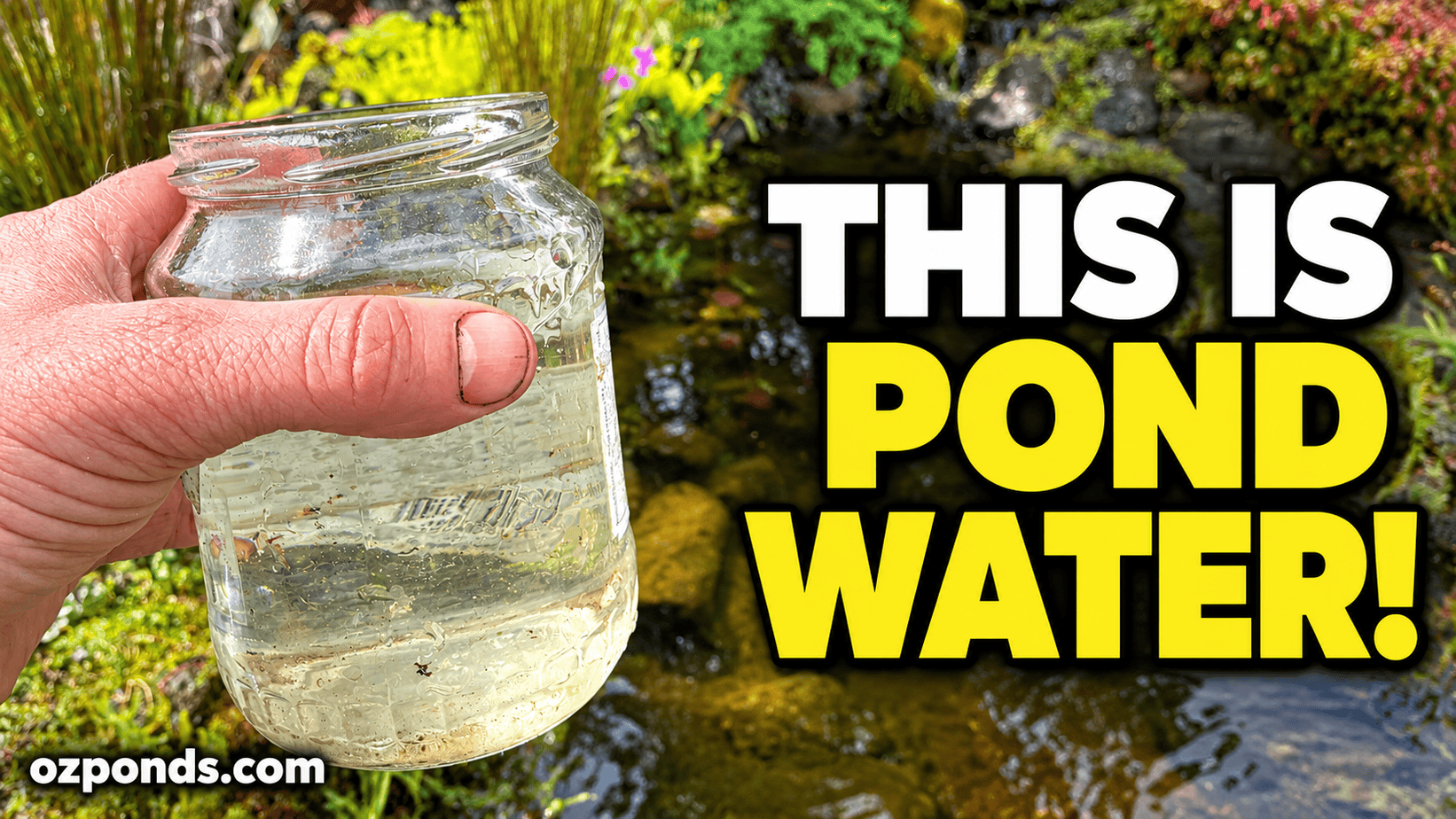
In my ponds, I build my own filters. They cost me a lot less than buying a comparable system, and they’ve given me crystal clear water. My favourite is a bog filter. A pump moves pond water slowly through a planted bed of rock and pebble. Solid waste settles, tiny organisms help process it, and the plants use nutrients as they grow. Then the water flows back to the pond.
I’m Kev, and I help people build and maintain ponds without spending a fortune. What I like about a bog filter is that you can make one in a container beside a small fish pond or build it straight into the garden. By the time the plants fill out, you can be looking right at the filter without realising it.
How does a bog filter clean pond water?
Think about what happens when water moves slowly through a wetland. Heavier bits settle out, plants put down roots, and all those underwater surfaces become home to microscopic life. A bog filter gives those same processes somewhere to happen in your backyard.
The rock and pebble give bacteria and other organisms a place to live. The plant roots provide even more surface area, and the plants take up nutrients as they grow. That’s why I want the water moving gently and evenly through the bed. If most of it races up one side and spills straight back into the pond, a lot of the filter you’ve built is hardly seeing any flow.
How big should a pond bog filter be?
I size the bog around the volume of the pond and what lives in it. A wildlife pond that attracts a few frogs is a different job from a pond full of large koi that you feed every day. These are the starting points I use.
| What lives in the pond? | Empty bog filter volume as a share of pond volume |
|---|---|
| Wildlife pond | 5% |
| Goldfish or other small fish | 10% |
| Koi or other large fish | 15–20% |
| Ducks, turtles or a heavy waste load | 25% or more |
Say you have a 2,000-litre goldfish pond. I’d start with about 200 litres of bog filter space, measured before the rock and pebble go in. For flow, my rule of thumb is up to six times the empty bog volume per hour. In this example, that’s about 1,200 litres per hour through the bog. The same maths works in gallons. A 1,000-gallon goldfish pond gives you a 100-gallon bog and about 600 gallons per hour through it.
If you’ve already got a pond in mind, plug your own numbers into my free bog filter sizing and flow calculator.
How do you build a simple upflow bog filter?
Most of mine are upflow bog filters. Water enters underneath the rock, rises through the bed and spills back into the pond. Here’s how I’d approach a small container version.
- Choose the container and its position. Use a watertight, fish-safe container big enough for the filter volume you’ve worked out. Position it so water can spill back into the pond by gravity. Before you fill it, make sure you can reach the spot where you’ll drain it.
- Give the muck a way out. On a raised container, I like a clean-out valve down low. Think about where that dirty water will go when you open it. It’s much easier to sort that out while the container is empty.
- Bring the pump line down to the base. On my small container bogs, I bring the pipe over the rim and down to a simple tee or elbow. I include an air break near the top so the line can’t siphon the bog back into the pond when the pump stops.
- Add the rock, pebble and plants. I start with larger rock at the bottom, leaving open space for water to spread out and solids to settle. Then I work up to smaller pebble near the top and plant into it. Choose plants that suit your climate and enjoy wet roots.
- Run it and watch the return. Check that the outlet comfortably carries the flow back to the pond. You can make the return a little waterfall or the start of a stream. I like being able to see it from the garden because I can tell at a glance whether the water is flowing as usual.
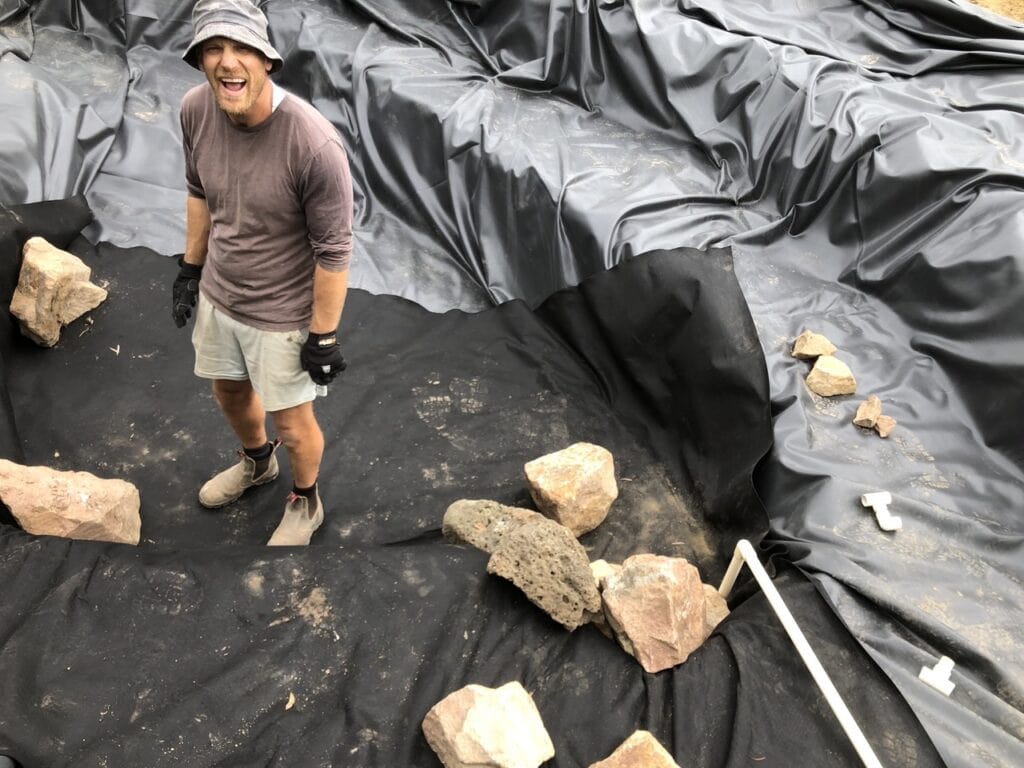
For a larger pond, you can excavate and line a bog beside it. You can also incorporate one into the pond or a stream. The idea is the same, but spreading water across a broad bed and getting settled waste back out takes a bit more planning. See my bog filter diagrams for different layouts.
What’s the difference between an upflow and a downflow bog?
In an upflow bog, water enters at the bottom, rises through the rock and pebble, and leaves at the top. In a downflow bog, water enters at the top, passes down through the bed, and is collected underneath before returning to the pond.
Both can work. I usually build upflow systems because I like having the settled waste down low where I’ve provided a way to remove it. If you’re deciding between the two, trace the water path with your finger. Where does the dirty water come in? Where will the muck collect? How will you get it out once there’s a whole bed of rock sitting there? That last question is the one I’d answer before building either version.
Do bog filters need cleaning?
Yes. Some of what goes into a bog gets broken down, but the rest accumulates. On a raised container I can open the bottom valve and flush out the dirty water. On a lined, in-ground bog, I leave an accessible clean-out riser so I can reach the bottom and pump out the settled muck. I want to be able to do that job without pulling out plants and shifting rock.
It’s also worth remembering that this is a living filter. You might put a small one together on a Saturday and have water coming over the spillway that afternoon. The bacteria still need time to establish and the plants need time to grow. Seeing the water circulate tells you the plumbing works. The biology takes a little longer.
Want help fitting a bog filter to your pond?
If you’re standing in the garden wondering, “Could I tuck a barrel behind those plants, or should I dig a bog beside the waterfall?”, that’s a good question to bring to the Ozponds community. A photo of the spot, your rough pond dimensions and what you want to keep in it give us something practical to work with.
For US$39 a year, you get my Pond Building Blueprint, access to the private Ozponds community, and Virtual Kev. The Blueprint walks you through how I size the bog, work out the flow and choose a pump. In the community you can share your plan, ask questions as you build, and see how other pond owners have tackled the same job. I get on there every day to see what people are building and help where I can. Get the Pond Building Blueprint and join the Ozponds community. 👍
Design Your Pond Using The Same System I Use
- A simple system that has helped people around the world design clear, low-maintenance ponds without spending a fortune.
- Includes access to the Private Ozponds community and Virtual Kev, a tool that helps you plan your pond step-by-step.