
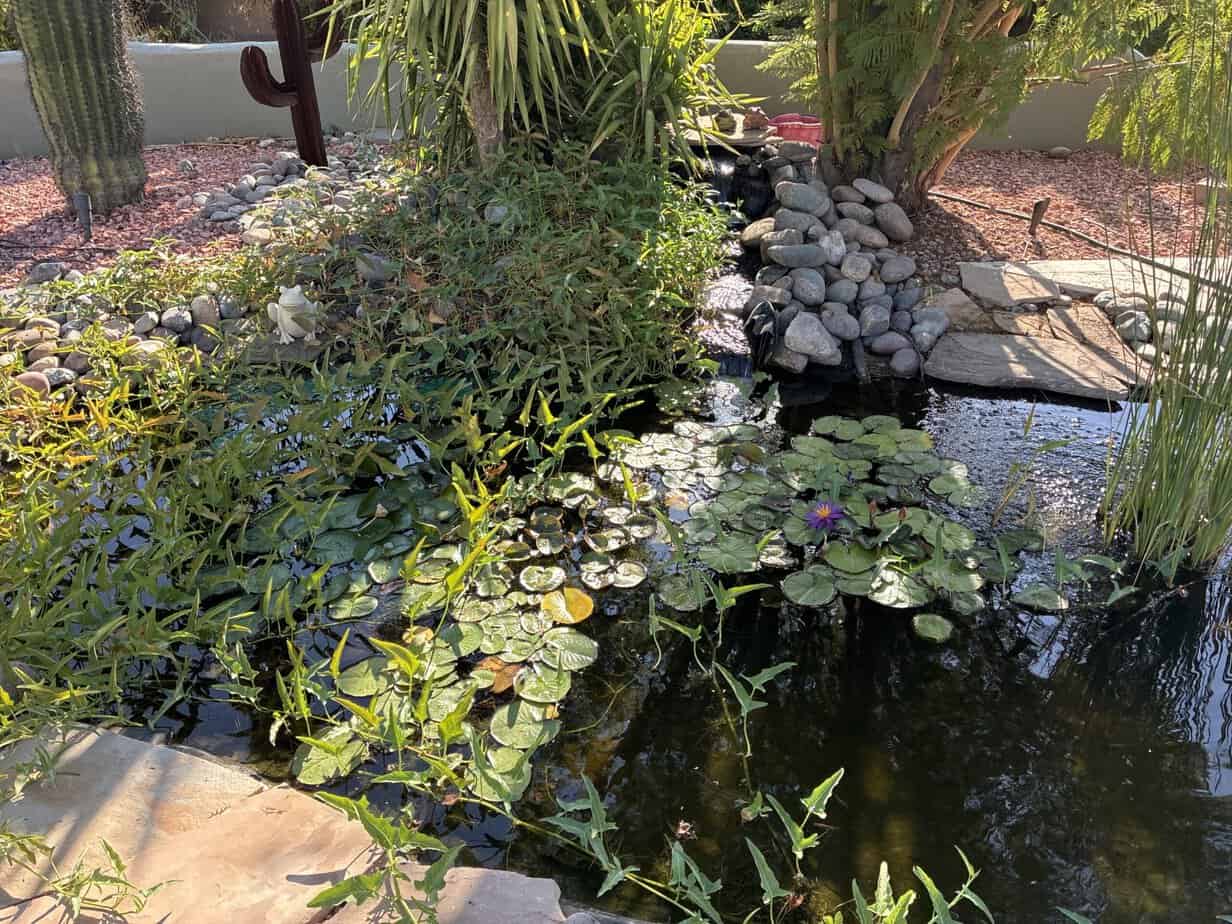
When Lee moved into a home in Phoenix, Arizona, the backyard pond came with it. Unfortunately, the pond’s equipment began breaking soon afterwards—and that was only the beginning.
The pond contained fish, very few plants and a waterfall for circulation, but keeping the water clear was a constant struggle. Beneath the surface, Lee eventually discovered around 12 inches (30 cm) of black sludge.
What followed wasn’t a perfect, trouble-free pond makeover. It was a process of removing years of accumulated waste, learning about pumps and water flow, dealing with algae, correcting mistakes and building a planted bog filter.
As Lee puts it:
“This pond can be my nemesis, but I love it!”
That honesty is what makes this pond story so useful. Sometimes a successful pond isn’t the result of getting every detail right the first time. It comes from being curious, making adjustments and refusing to give up.
How do you restore a neglected pond full of sludge?
Once Lee realised just how much black silt had accumulated, a simple filter clean wasn’t going to solve the problem.
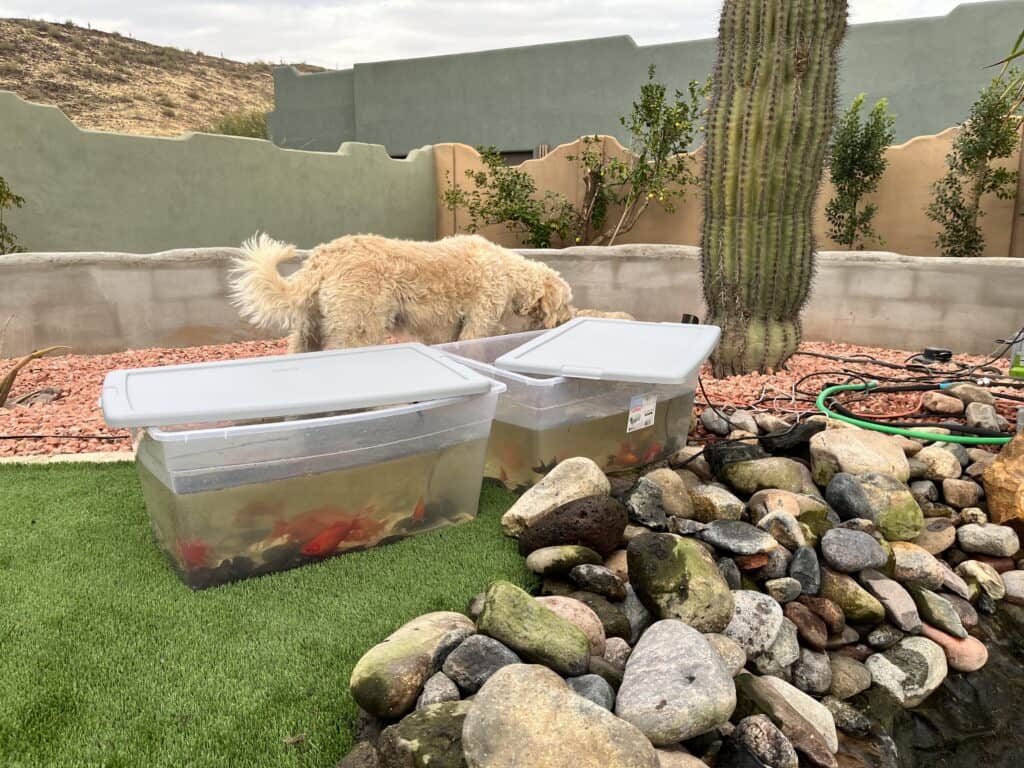
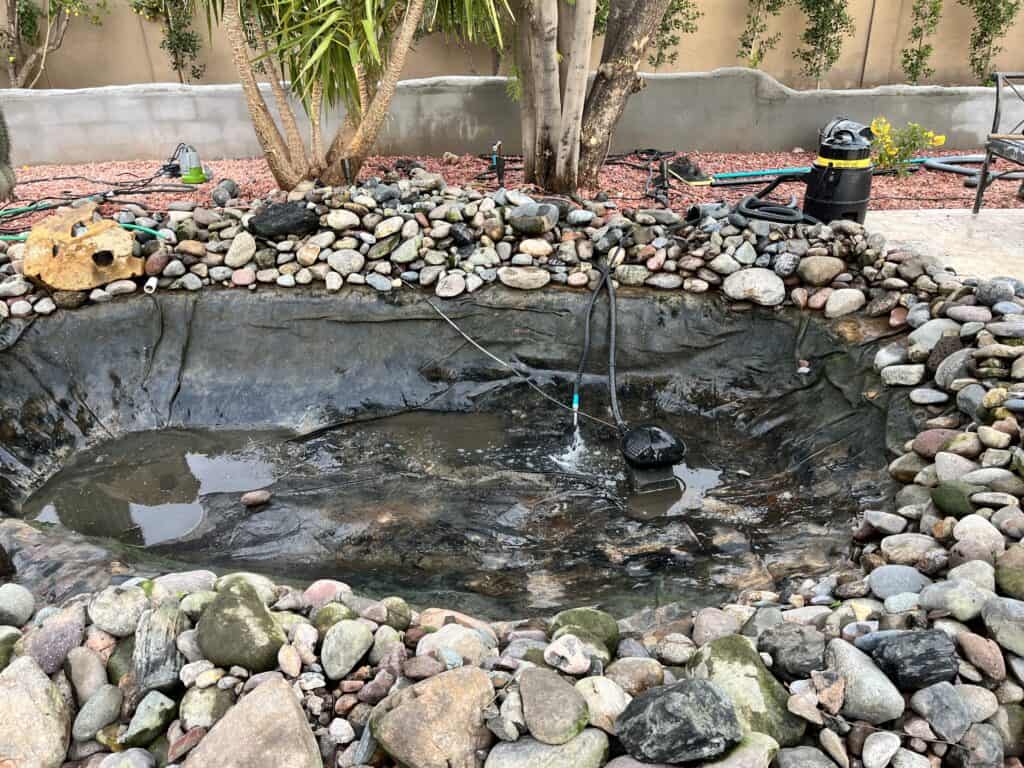
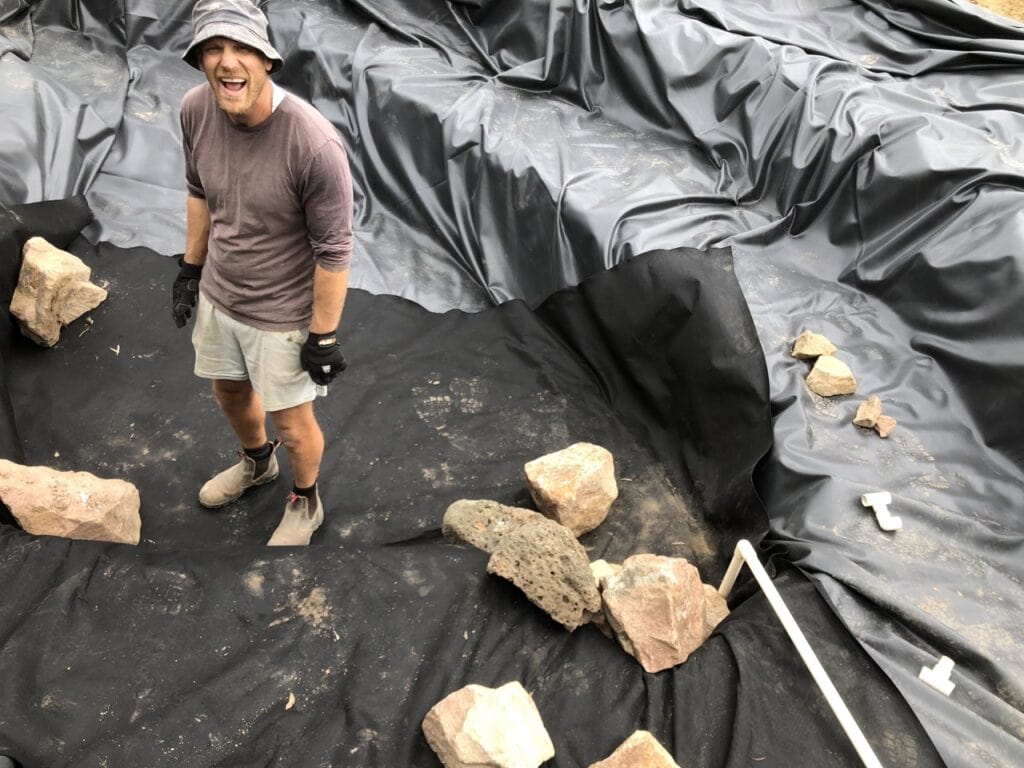
The fish were temporarily moved into large containers, the pond was drained and approximately 12 inches of black sludge was removed. Lee also took out piles of rocks from the bottom.
The photos show what a substantial clean-out this was. With the water lowered, the liner, pumps and hoses are visible and the scale of the job becomes much clearer.
Rocks can look very natural in a pond, but large quantities on the bottom may trap leaves, fish waste and other organic material in the spaces between them. Over time, that material can decompose into a thick layer of sludge that is difficult to remove without emptying the pond.
Lee’s experience is a useful reminder that persistent murky water or algae may not be caused by one missing product. Sometimes the pond is carrying a large backlog of organic waste that needs to be physically removed before the filtration system has a fair chance.
How large is Lee’s pond?
Using the calculations in the Pond Building Blueprint, Lee worked out that the pond holds approximately 850 US gallons, or about 3,200 litres.
Knowing the actual volume matters because it provides a starting point for choosing pumps, planning circulation and sizing filtration. Guessing by appearance alone can be surprisingly inaccurate, especially with an irregularly shaped pond.
“I figured that out using your Blueprint! I learned about pumps, water flow, etc.”
What helped improve circulation and oxygenation?
The original pond relied on a waterfall for circulation. During the rebuild, Lee added a new waterfall along with aeration and additional water movement.
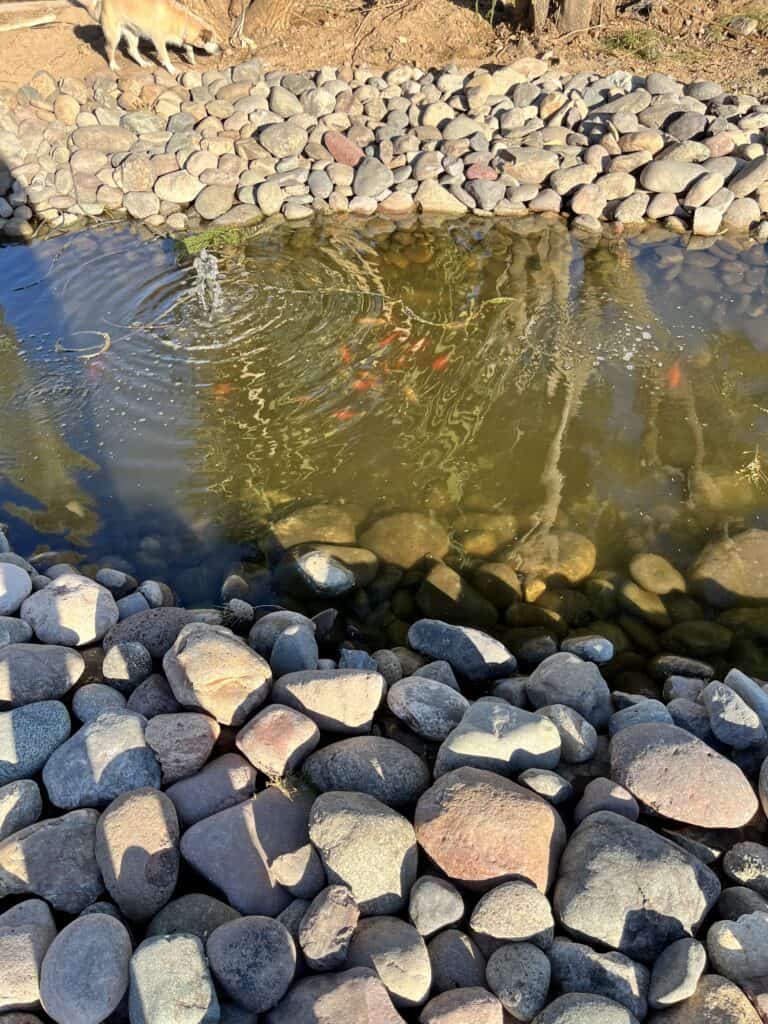
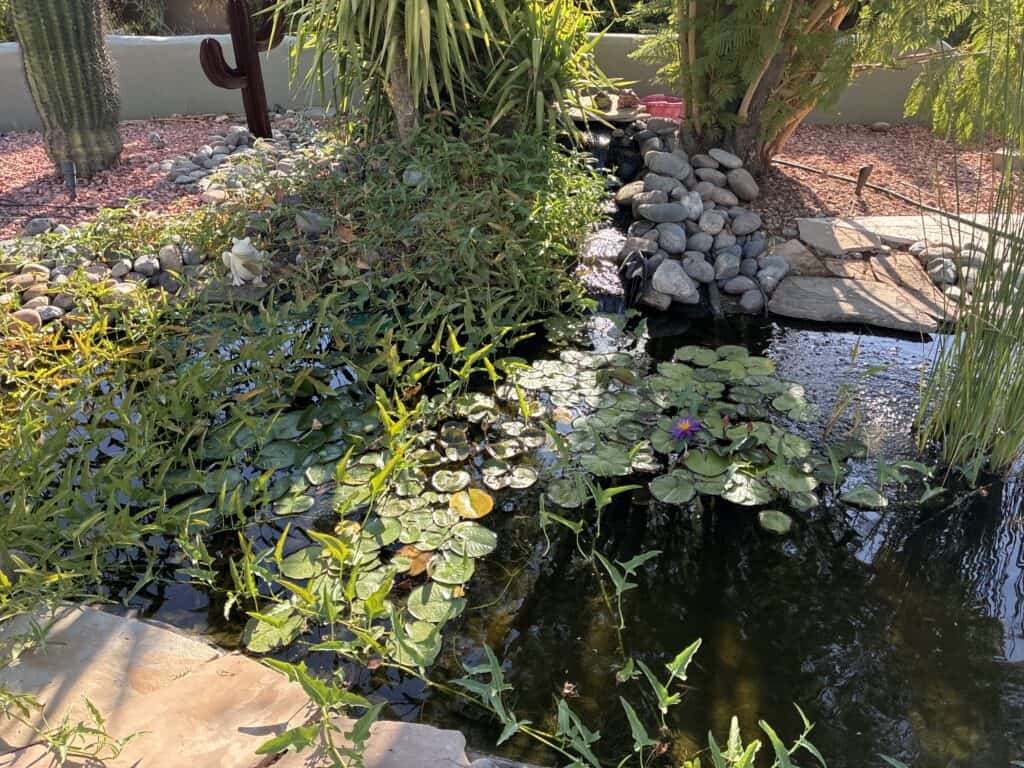
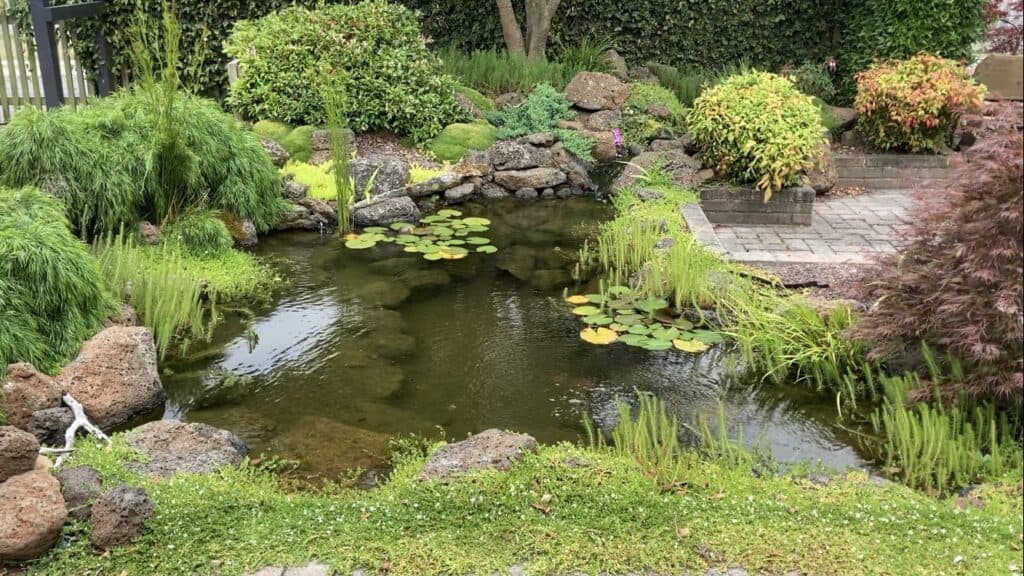
In the finished photos, water enters through a rock-lined waterfall at one end of the pond. The combination of moving water and aquatic plants has turned what was once a difficult inherited pond into a much more inviting backyard feature.
Good circulation helps move oxygenated water around the pond and carries suspended material towards the filtration system. Aeration is especially valuable in a warm climate such as Phoenix, because warmer water holds less dissolved oxygen than cooler water.
Why did Lee add a bog filter?
Algae remained Lee’s “worst nemesis,” but chemicals weren’t the answer Lee wanted.
“Then I listened to you about bog filters. I used your Blueprint. It has been a lifesaver.”
Lee built a 150-gallon (about 570-litre) planted bog filter beside the pond. That gives a bog volume equal to roughly 18% of the pond’s stated water volume—a good size for a goldfish pond.
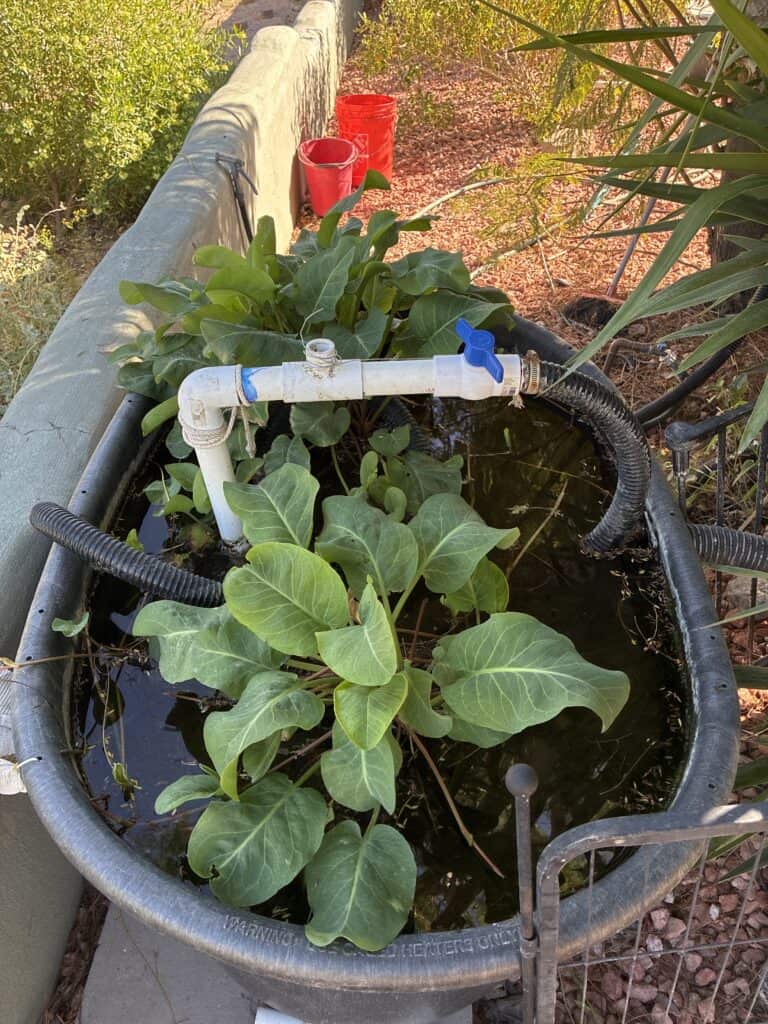
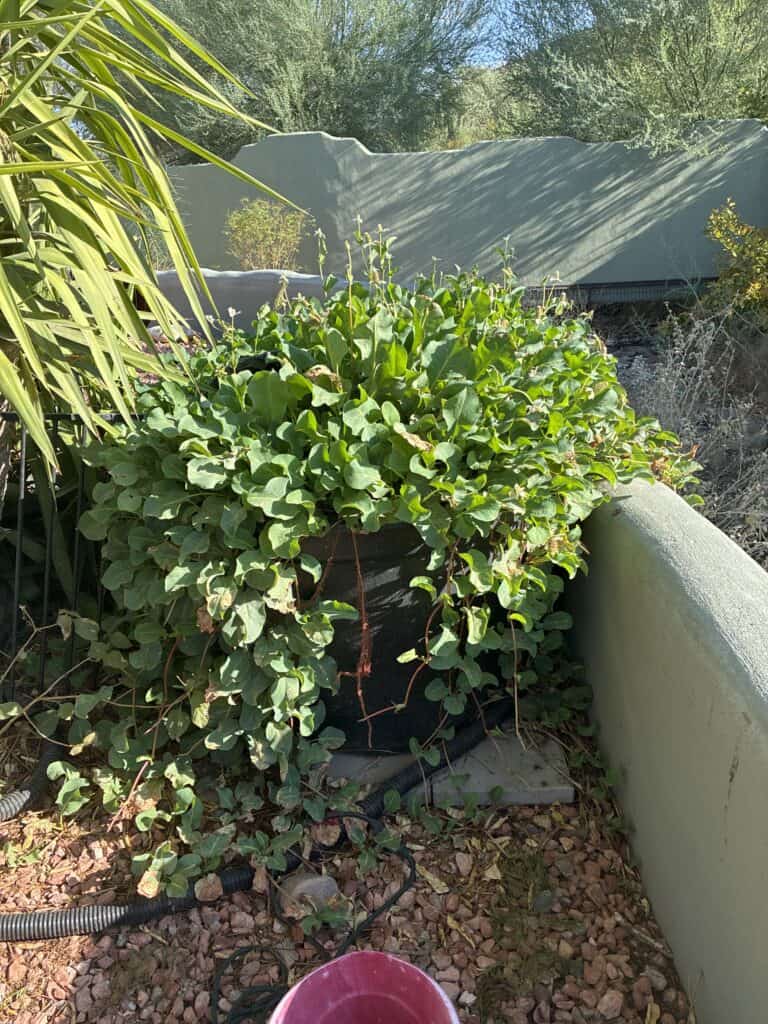
The photos show a round stock tank containing gravel and vigorous plants. Water is pumped into the filter through a mixture of flexible pond hose and PVC plumbing before returning to the pond. As water passes through the gravel and plant roots, the bog provides a large surface area for beneficial microbes while the plants use some of the available nutrients.
The mature filter is almost hidden beneath its growth. Trailing plants spill over the sides, helping the utilitarian tank blend into the surrounding garden.
What happens when the bog-filter flow is wrong?
Building the filter did not mean every detail immediately worked.
Lee first burned out a pump that delivered the desired flow. The replacement pump was larger, but then the flow through the system was too fast. A ball valve was added so the flow could be reduced and adjusted.
“The PVC industry designed a completely nonsensical sizing for pipes and connectors. The pond-pump hose people obviously don’t talk with the PVC people! Hahaha!”
Anyone who has tried joining flexible pond hose to rigid PVC will probably sympathise. Nominal pipe sizes, internal and external diameters, reducers and brand-specific fittings don’t always match as logically as we might hope.
Lee’s experience also illustrates why a pump shouldn’t be selected from its advertised maximum flow alone. The real flow reaching a bog filter is affected by vertical lift, pipe diameter and length, bends, fittings and restrictions. An adjustable pump or a correctly arranged valve can make commissioning and fine-tuning much easier.
How did plants change the pond?
Early photos show a much barer pond. In the finished pond, water lilies spread across the surface, marginal plants soften the edges and dense growth fills the bog filter.
Plants aren’t simply decoration. Their roots and surrounding biofilm provide habitat for microorganisms, while active growth removes nutrients from the water. Surface cover can also reduce the amount of sunlight reaching the water and give fish a place to shelter.
The transformation is particularly striking in Phoenix’s desert landscape. The finished pond sits among gravel, cactus and drought-tolerant trees, but the water and foliage create a lush little pocket within the garden.
What about all those goldfish?
Once the pond began settling in, Lee encountered another familiar goldfish problem:
“Then I realised that goldfish reproduce like bunnies!”
Lee added small fish that eat some of the eggs and reportedly grow to only about two inches. The species wasn’t identified, so anyone considering the same approach should first check that the fish are compatible with their pond, climate and local regulations.
Fish numbers still need watching. More fish mean more food and more waste, increasing the load placed on the pond’s oxygen supply and filtration—even when a good-sized bog filter is installed.
What can we learn from Lee’s pond rebuild?
Lee’s story contains several practical lessons for anyone restoring an inherited or neglected fish pond:
- Remove major accumulations of trapped organic sludge rather than expecting new filtration to make them disappear.
- Calculate the pond volume before sizing pumps and filters.
- Improve circulation and aeration, particularly in a hot climate.
- Give a goldfish pond generous biological filtration.
- Expect the actual pump flow to change once pipework, lift and fittings are included.
- Make provision for adjusting flow during commissioning.
- Use plants as part of the overall pond ecosystem, not simply as decoration.
- Keep an eye on fish reproduction before the pond becomes overstocked.
Most importantly, don’t assume that needing to change something means the project has failed. Pumps, pipework, flow and planting often need some refinement once a real system is running.
Design Your Pond Using The Same System I Use
- A simple system that has helped people around the world design clear, low-maintenance ponds without spending a fortune.
- Includes access to the Private Ozponds community and Virtual Kev, a tool that helps you plan your pond step-by-step.
Frequently asked questions
How big is the bog filter on Lee’s 850-gallon pond?
Lee used a 150-gallon bog filter for an approximately 850-gallon goldfish pond. That is about 18% of the stated pond volume.
Can a bog filter help control pond algae without chemicals?
A well-sized bog filter can be an important part of a non-chemical approach. It provides biological filtration and allows plants to use nutrients, but results also depend on fish load, accumulated waste, circulation, sunlight, feeding and plant growth. In Lee’s case, the bog filter was added after a major sludge clean-out and alongside better aeration, circulation and planting.
Why might the actual pump flow be lower than the advertised flow?
Pump ratings are generally measured under favourable conditions. Vertical lift, narrow pipe, long pipe runs, bends, valves and other fittings all add resistance and reduce the flow delivered to the filter or waterfall.
Can you reduce the flow from an oversized pond pump?
Many pond systems can be adjusted with a valve on the discharge side of the pump, provided the pump manufacturer permits it. A variable-speed pump can make adjustment simpler. Avoid restricting a submersible pump’s intake, and always follow the manufacturer’s instructions.
Should rocks be placed across the bottom of a fish pond?
Rocks can create a natural appearance and useful biological surface area, but deep or inaccessible layers may also trap organic debris. The right choice depends on the pond design and whether the spaces between the rocks can be kept clean.
A pond—and a lesson in persistence
If you’re planning a pond or trying to rescue an existing one, the Pond Building Blueprint explains the system I use to work through pond volume, filtration, bog-filter sizing, pump selection, circulation, plumbing and water features.
But Lee’s final reflection may be even more valuable than any individual technical detail:
“It is such a great practice for how to do life. Be curious, lean into the hard, pivot and adjust, and you can get beauty on the other end.”
The clear water, water lilies, dense bog plants and fish visible in the finished photos show the beauty on the other end of this project. It may still be Lee’s nemesis from time to time—but it’s clearly a much-loved one.
Thanks so much to Lee for sharing the story and photos.
About to build a pond… or already have one?
Sign up for my email list and I’ll send you DIY-friendly pond tips, along with a few helpful tools like calculators, gear recommendations, and more.