
A big thank you to Alasdair from Cheshire, England, for sharing his experience after building a bog filter on his 3,200-litre pond.
Here’s Al’s story:
I’ve been watching Kev’s videos on YouTube for about two years and last spring I finally took the plunge, ripped everything out and built a large bog filter for my 3,200-litre pond.
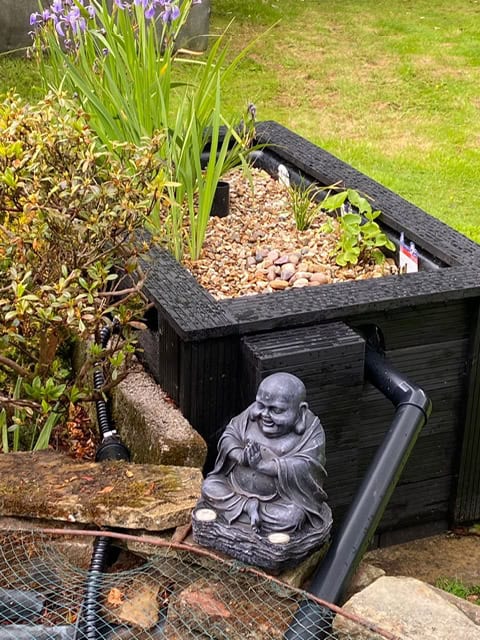
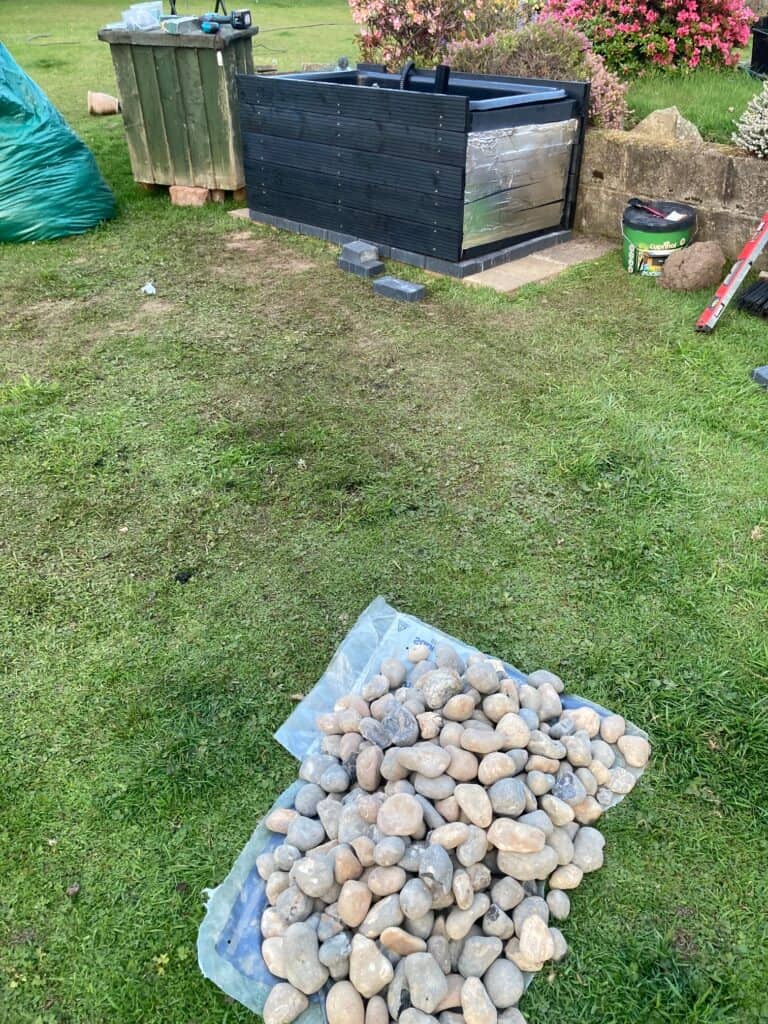
The bog filter holds around 520 litres and is built inside a plastic vat clad with decking. Water enters at the bottom, passes through around six inches of void space, then moves through large rocks, medium rocks, and finally gravel at the top where the plants are growing.
The outlet is twice the size of the inlet, and I also installed a section of downpipe running from the top to the bottom with slits cut into it so I can use a pond vacuum for cleaning when required.
The results were brilliant.
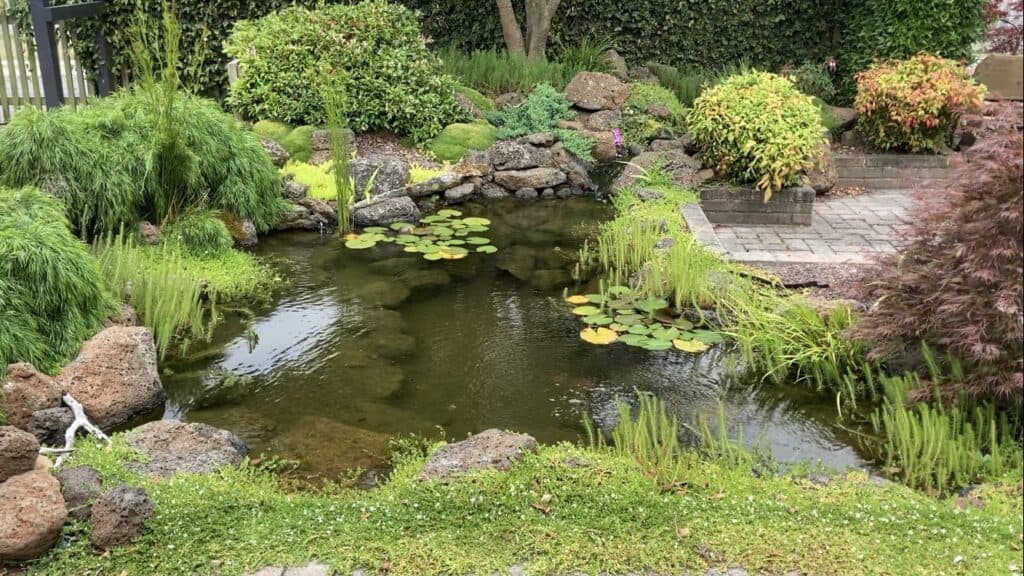
The water cleared within five weeks. I keep twelve small koi carp, around 4–6 inches long, which is a fairly heavy fish load for a pond this size. Despite that, the bog filter handled the waste with no issues.
My water tests showed:
- pH 8
- 0 ammonia
- 0 nitrite
- 0 nitrate
Winter arrived and temperatures dropped to -6°C. As autumn progressed and the water cooled, it started to cloud up slightly. I kept the pump running and covered both the pond and bog filter with corrugated plastic sheeting after cutting the plants back.
Everything seemed fine.
Then spring arrived, and this is where things became interesting.
As water temperatures climbed into the 5–8°C range, the pond suddenly turned into pea-green soup. We had beautiful sunny days, but the air temperature was still quite cold.
The pH climbed to 9. Nitrite remained at zero and there was only a trace of nitrate. The bog plants had only just started growing again.
My theory is that the algae initially exploded as the pond woke up for spring. Then, as the bog filter and plants slowly became active again, they started competing with the algae for nutrients. During this period I noticed bubbles and small patches of foam coming from the return, which I’ve since learned can be a sign of algae dying off.
The process continued for several weeks as water temperatures slowly rose above 10°C.
Occasionally one or two fish would flash. At first I wondered if parasites were involved, but the water was still too cold for that to be likely. Looking back, I suspect the elevated pH may have been a contributing factor.
The pump also needed cleaning every couple of weeks because of the amount of algae moving through the system.
Then, after around six weeks, everything changed.
The water temperature finally stayed consistently above 10°C. The plants exploded into growth, the water became crystal clear, and the pond settled down completely.
Today my readings are:
- pH 8
- 0 ammonia
- 0 nitrite
- 0 nitrate
For the first time in years, I haven’t seen any signs of parasite problems.
The biggest lesson for me was learning that spring algae blooms are sometimes simply part of the process.
In my pond, the bog filter wasn’t failing. The system just needed time for the bacteria and plants to become fully active again after winter.
I’ve learned to be careful with feeding during this period and avoid adding unnecessary nutrients while the pond is still waking up. Most importantly, I’ve learned that patience is often the best treatment.
My pond won’t necessarily be crystal clear every day of the year, but if I allow the system time to respond as temperatures rise, it eventually finds its balance.
Water temperature matters, especially in colder climates and heavily stocked ponds.
A Few Thoughts from Kev
One thing I liked about Al’s story is that nothing was actually broken.
A lot of pond owners would see green water, rising pH, and a struggling pump and immediately start looking for a treatment or a quick fix.
Instead, Al paid attention to what was happening, monitored the water parameters, and gave the pond time to respond.
Here in Australia we don’t experience the same harsh winters that many pond keepers in the UK, Europe, Canada and northern United States face, but the principle is the same.
Ponds are seasonal systems.
Plants, bacteria and fish all respond differently to temperature changes, and sometimes nature runs on a different schedule than we’d like.
Thanks again to Al for taking the time to share his experience. I’m sure plenty of pond keepers in colder climates will recognise exactly what he’s describing.
If you want to share your pond story click here.
Or if you want the full system I use to design my ponds you can learn more here.
About to build a pond… or already have one?
Sign up for my email list and I’ll send you DIY-friendly pond tips, along with a few helpful tools like calculators, gear recommendations, and more.