
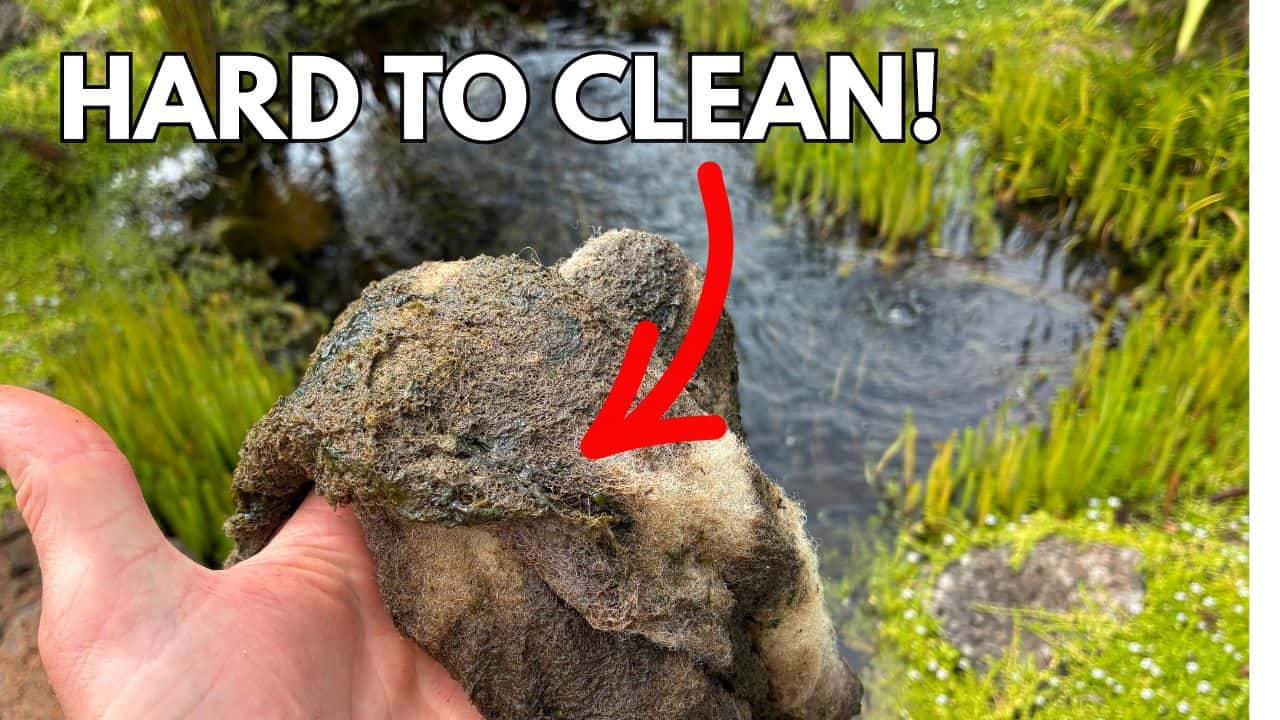
One of the biggest mistakes people make when building a pond filter…
is building something they can’t easily clean.
At first, everything seems fine.
The water looks clear.
The fish are happy.
The filter appears to be working.
But over time… waste builds up.
And suddenly, the thing that was supposed to make your life easier
becomes a horrible job to maintain.
The Problem Most People Don’t See
Every pond produces waste.
- Fish waste
- Uneaten food
- Dead algae
- Leaves and plant debris
In a natural system, that waste breaks down and settles.
But when we add filtration, we’re trying to capture that waste somewhere else so we can remove it from the system.
Here’s the catch:
👉 Waste never disappears.
👉 It just gets moved somewhere else.
And if your filter traps that waste… but doesn’t let you remove it easily…
You’ve built yourself a problem.
The Biggest Filter Design Mistake
Most people design filters around this question:
“How do I trap waste?”
That’s the wrong question.
Because trapping waste is easy.
Removing it is the hard part.
What Usually Goes Wrong
These setups work at first… but eventually turn into maintenance nightmares:
- Packed filter media that clogs up
- Pumps buried under rock
- Filters you can’t access
- Containers with no drainage
- Systems that need to be pulled apart just to clean
Sound familiar?
The Shift That Changes Everything
Instead of asking:
👉 “How do I trap waste?”
Start asking:
👉 “How do I remove waste easily?”
That one shift will completely change how you design your pond.
4 Simple Principles for Low-Maintenance Filters
1. Let Gravity Do the Work
Waste is heavier than water.
If you slow the water down…
the waste settles.
So design your system so waste settles somewhere you can:
- Drain
- Scoop
- Flush out easily
2. Give Yourself Access
If you can’t reach it…
you won’t maintain it.
Simple as that.
Good filters aren’t just hidden and pretty —
they’re practical.
3. Add Drain Points
If waste collects in one spot and you can open a valve…
Cleaning goes from:
❌ Weekend job
➡️
✅ 2-minute job
4. Accept That Some Waste Stays
This is a big one.
Trying to remove everything creates more work.
Natural ponds:
- Allow some sediment
- Export some waste
It’s about balance, not perfection.
How I Actually Build My Filters
This is where the Ozponds system comes in.
Most of my ponds use a bog filter as the main filtration.
Why Bog Filters Work
A bog filter mimics a natural wetland:
- Water flows slowly through rock and gravel
- Massive surface area for beneficial bacteria
- Plant roots absorb nutrients
But here’s the key…
👉 It’s not “removing” waste
👉 It’s concentrating it somewhere manageable
The Critical Detail Most People Miss
Flow rate matters.
You don’t want to blast water through.
You want it slow enough that:
👉 Waste settles
👉 And stays somewhere you can deal with later
And Most Important…
I always design bog filters with:
- Clean-out ports
- Flush valves
- Easy access
Because if it’s hard to clean…
It won’t get cleaned.
Reducing Maintenance Even Further
This is where most DIY ponds level up.
I almost always pair filtration with a skimming system:
- DIY skimmer
- Intake bay
What a Skimmer Actually Does
It pulls floating debris into one spot:
- Leaves
- Pollen
- Surface waste
Instead of letting it sink and become a bigger problem.
Why This Works So Well
- Keeps the surface clean
- Feeds oxygen-rich water to your filter
- Protects your pump from clogging
- Reduces maintenance dramatically
And the best part?
👉 You can build these into the pond
👉 No need to cut through your liner
👉 You can even add them later
The Big Idea
When you design a pond filter…
Don’t just think about how it works.
Think about how you’re going to clean it.
Because:
👉 A filter that traps waste but hides it = future headache
👉 A filter that concentrates waste and gives you access = easy pond
The Ozponds Way
Every pond I build follows the same basic principles.
I’m not reinventing things every time —
I’m applying a system.
That system covers:
- Pump sizing
- Bog filter sizing
- Intake bay design
- Plumbing
- Materials
- Flow paths and circulation
I’ve put all of that into the Pond Formulas Blueprint.
It’s not about copying my pond.
It’s about understanding the thinking…
so you can design something that works for your space.
About to build a pond… or already have one?
Sign up for my email list and I’ll send you DIY-friendly pond tips, along with a few helpful tools like calculators, gear recommendations, and more.