
Sometimes the most interesting pond systems aren’t the most complicated ones.
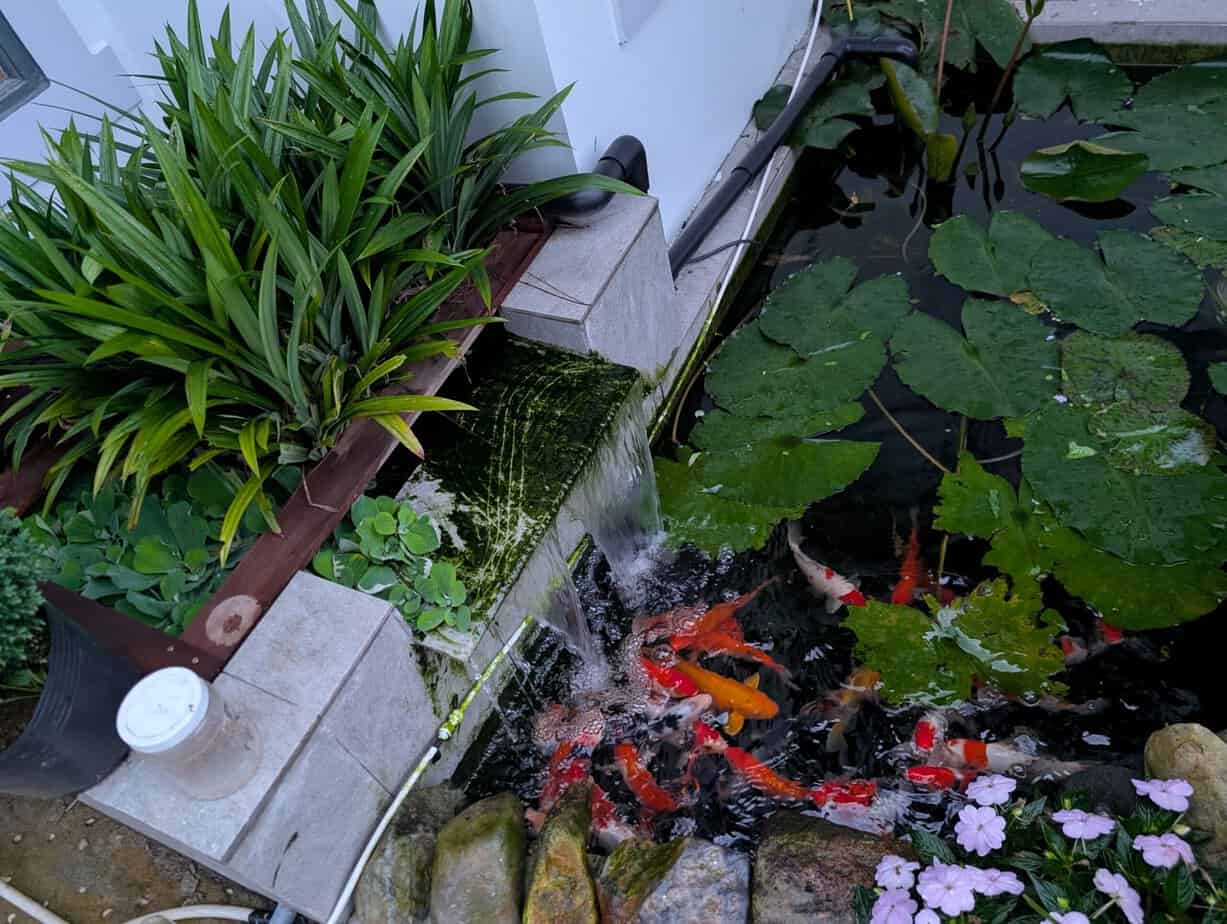
Vu Tran’s pond in Da Lat, Vietnam holds only around 2.5 cubic metres (2,500 litres / 660 gallons) of water. It contains a water lily, a simple planted filtration area and, somewhat accidentally, 35 koi.
There are no complicated banks of filter chambers or huge beds of specialised filter media. Instead, Vu relies heavily on plants, their roots, some filter mat and an area where heavier waste can settle before being drained away.
And despite the number of fish, he says the pond has been running for around six months without a proper clean or water change, the water hasn’t turned green and all 35 koi are still going strong.
That wasn’t necessarily how he planned it.
A Pond That Sat Empty for Nearly Ten Years
Vu actually started building the pond around fifteen years ago.
“Honestly, I had absolutely no idea what I was doing.”
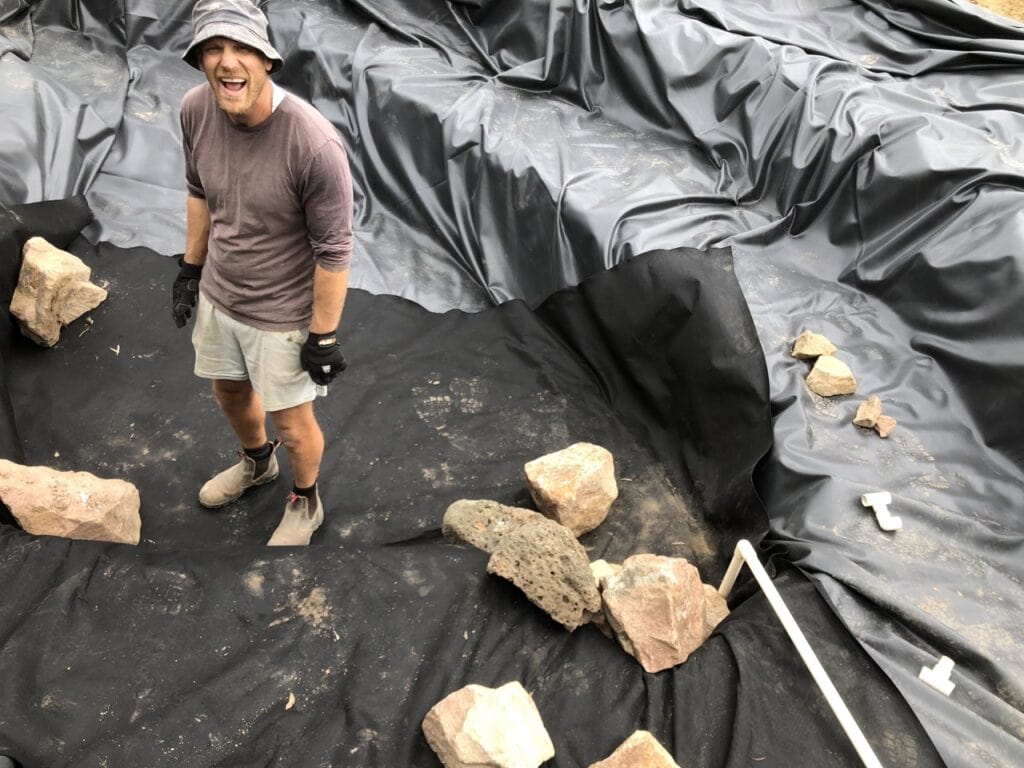
The original pond didn’t go particularly well. It flooded, parts of the system didn’t work as intended and eventually Vu gave up on it.
For almost ten years, the pond sat there without fish.
Then, when he renovated his house about a year ago, he decided it was time to give the pond another chance.
This time he approached things differently.
“I did my homework. I read everything I could find about koi ponds, filtration and natural pond systems.”
During that research Vu came across Ozponds and spent time looking at different approaches to pond filtration and circulation.
But rather than making the rebuilt pond increasingly complicated, he went in the other direction.
He decided to keep it simple.
Design Your Pond Using The Same System I Use
- A simple system that has helped people around the world design clear, low-maintenance ponds without spending a fortune.
- Includes access to the Private Ozponds community and Virtual Kev, a tool that helps you plan your pond step-by-step.
How Big Is Vu’s Koi Pond?
The pond holds approximately 2.5 cubic metres of water, or about 2,500 litres.
One thing Vu would definitely change if he built it again is the depth.
The pond is only around 50 cm deep.
When he originally built it, Vu was concerned about children potentially falling into the pond, so keeping it shallow seemed like the safer option at the time.
Looking back, he says:
“If I built it again, I’d probably make it 80 cm to a metre deep.”
That extra depth would provide considerably more water volume within a similar footprint, which is particularly useful when keeping koi.
And Vu could probably use the extra water volume, because of another decision he made.
Can You Keep 35 Koi in a 2,500-Litre Pond?
Vu added 35 inexpensive locally purchased koi to the pond.
Even he wasn’t expecting that decision to work out quite as well as it did.
“I honestly expected some of them to die, especially considering what happened with the old pond. Somehow, every single one survived.”
After about five months, Vu estimated the larger fish at around 500 grams each and the smaller ones at around 400 grams.
Their growth has varied considerably.
“They’re just inexpensive koi I bought locally, nothing fancy, so the quality and growth rates are all over the place. Some grow really quickly and some hardly seem to grow at all.”
Vu now estimates that he has around 15 kilograms of koi swimming around in this relatively small pond.
His filtration system therefore has quite a lot of work to do.
And Vu readily admits that 35 koi may have been a few too many.
“At this point I’m still wondering what I’m going to do with all of them.”
I certainly wouldn’t use this pond as a stocking-rate recommendation. As those koi continue to grow, the amount of waste they produce and the demand placed on the system will increase significantly.
But it does make what Vu has done with the filtration particularly interesting.
How Does the Planted Pond Filter Work?
Rather than relying on an elaborate mechanical and biological filter, Vu has created a planted filtration area.
Water passes through the roots of floating plants and pandan plants before returning to the main pond.
There is also a water lily growing directly in the pond.
Some filter mat in the filtration area helps intercept solid material, while heavier waste is allowed to settle into a collection area below.
Once enough sediment has accumulated, Vu can simply drain it from the bottom.
That’s essentially the system.
“There’s no gravel or complicated media bed to clean. Anything heavy eventually settles at the bottom of the settling area. When enough builds up, I can simply drain it from the bottom.”
I really like the basic principles behind this.
There is somewhere for solids to be captured or settle, somewhere for that accumulated waste to be removed, plenty of plant roots exposed to nutrient-rich pond water and moving water returning to the pond.
It doesn’t necessarily have to be complicated.
Can Pond Plants Really Do Most of the Filtering?
Plants can be an incredibly useful part of a pond filtration system.
As fish waste and other organic material break down, nutrients become available in the water. Growing plants can take up some of those nutrients and incorporate them into new growth.
The enormous root mass produced by healthy plants also creates plenty of surface area where microorganisms can colonise.
Vu’s climate may be particularly helpful here.
In a climate where plants can remain actively growing for much of the year, you potentially have a biological filtration system that is continually producing new roots and plant growth.
But I wouldn’t say the plants are working completely alone.
Vu also has:
- moving and aerated water from the returning flow
- filter mat helping capture solids
- a settlement area for heavier waste
- a bottom drain arrangement allowing accumulated material to be removed
So while the plants appear to be doing a huge amount of the work, the whole system is functioning together.
That’s an important distinction if you want to borrow ideas from Vu’s pond.
Six Months Without Green Water
Perhaps the most impressive part of the story is how little Vu says he has needed to interfere with the pond.
“I haven’t properly cleaned the pond or changed the water for about six months. The water hasn’t turned green, the fish are healthy and the system just keeps running.”
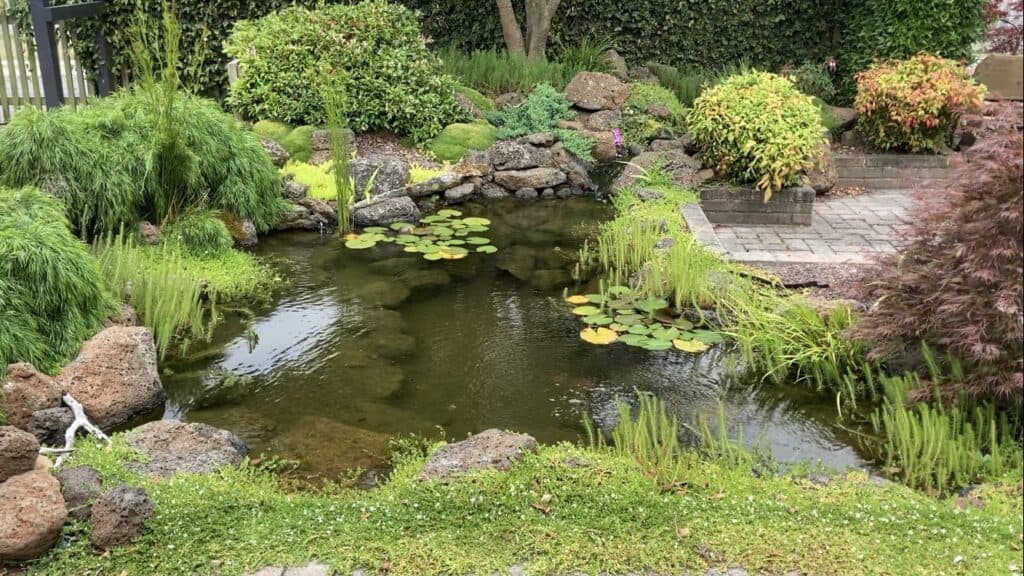
You can see in the photos that there is a substantial amount of plant growth around the filtration area and plenty of lily coverage over the main pond.
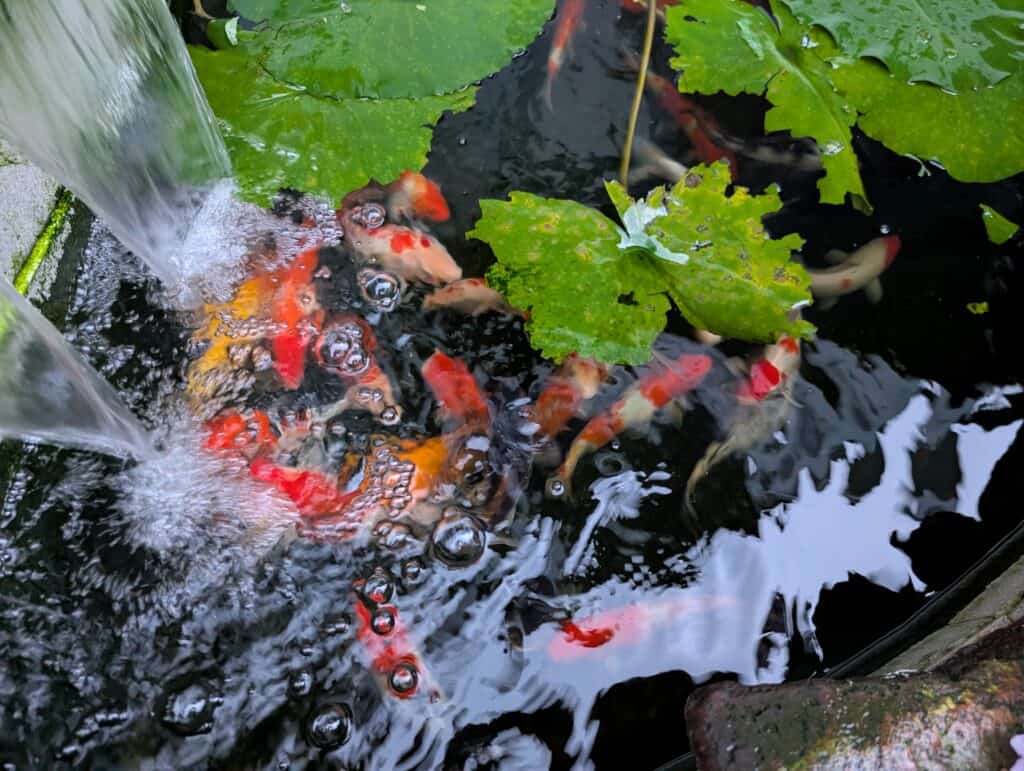
The pond also has a strong return of moving water where the koi tend to congregate.
I wouldn’t take Vu’s experience as meaning that every koi pond should go six months without maintenance or water changes. Every pond is different, particularly when fish stocking levels, feeding rates, temperatures and plant growth change.
What I would take from it is that good pond filtration doesn’t necessarily mean continually cleaning complicated equipment.
If waste can be separated and removed easily, while biology and plants are given the conditions they need to work, pond maintenance can become surprisingly simple.
The Pond’s Biggest Problem Might Actually Be Its Success
Vu started with a pond that failed.
It flooded.
He abandoned it.
It then sat without fish for almost a decade.
Fifteen years after first building it, his problem is almost the complete opposite.
The pond works — and all the fish survived.
That means Vu now has to think about what happens as those 35 koi become considerably larger.
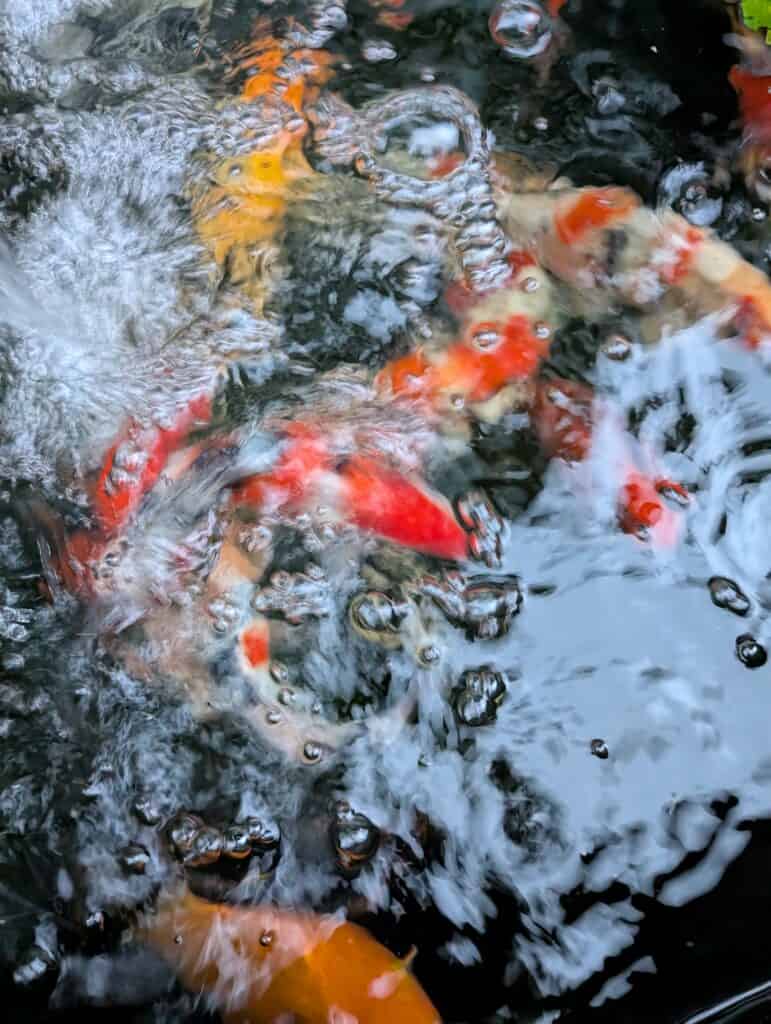
A koi weighing 400 or 500 grams today can potentially place much more demand on the pond as it grows. More fish mass means more food going into the system, more waste and greater oxygen demand.
So if this were my pond, that’s the thing I’d keep watching.
The simple filtration system has coped remarkably well so far, but the pond itself isn’t going to get any bigger while the koi certainly can.
What Can We Learn From Vu’s Pond?
I think Vu summed it up better than I could:
“A pond doesn’t necessarily need to be complicated. Plants, roots, somewhere for the waste to settle, and a bit of patience have done most of the work for me.”
That’s probably the biggest lesson from this pond.
You don’t necessarily need to keep adding equipment.
What matters is understanding what you’re trying to achieve.
You need sufficient circulation and oxygen. You need somewhere for beneficial microorganisms to live. You need a way of dealing with the solid waste entering the system. And if you can use actively growing plants to remove some of the available nutrients, even better.
Vu has managed to combine those principles in an incredibly simple system.
As he puts it:
“Apparently I’m now the owner of about 15 kilos of koi that I have no idea what to do with.”
After the first pond failed and then sat abandoned for almost ten years, that’s not a bad problem to have.
About to build a pond… or already have one?
Sign up for my email list and I’ll send you DIY-friendly pond tips, along with a few helpful tools like calculators, gear recommendations, and more.
Frequently Asked Questions
Can plants be used to filter a koi pond?
Yes. Aquatic and marginal plants can form an important part of a pond filtration system by taking up nutrients and providing a large amount of root surface area for microorganisms. In Vu’s pond, plants are combined with filter mat, settlement and good water movement rather than being the only form of filtration.
Do you need gravel in a planted pond filter?
Not necessarily. Vu’s system doesn’t use a traditional gravel bog filter. Instead, water moves through a planted area containing a large amount of plant roots, while filter mat catches some suspended material and heavier solids settle below.
A gravel bog is another way of achieving biological filtration and nutrient removal, but Vu’s pond is a good example of how the same basic ecological principles can be used in a different design.
Is 50 cm deep enough for a koi pond?
Vu’s pond is approximately 50 cm deep and his koi have survived successfully so far, but he says this is one part of the pond he would change.
If rebuilding it, he would make the pond around 80 cm to 1 metre deep, giving the fish considerably more water volume.
Is 35 koi too many for a 2,500-litre pond?
Thirty-five growing koi represents a very heavy fish load for a pond of this size. Vu’s system is currently coping, but he already recognises that the number of fish is becoming his biggest problem.
As the koi grow, their filtration, oxygen and space requirements will increase.
Do pond filtration systems need to be complicated?
No. The individual components can be quite simple if the overall system addresses the fundamentals: circulation, oxygen, biological activity, solids management and nutrient control.
Vu’s pond is an excellent real-world example.
Want to Build Your Own Low-Maintenance Pond?
If you’re planning your own pond, the Pond Building Blueprint is the step-by-step system I use to help work through things such as pond volume, filtration, bog filter sizing, pumps, circulation, plumbing, water features and pond ecology.
And a big thank you to Vu Tran in Da Lat, Vietnam, for sharing his pond, photos and story.
Fifteen years after starting the first version, I reckon he’s earned the right to finally enjoy it.