

Crystal-clear water, low running costs, and almost no maintenance… sounds too good to be true, right?
Well, that’s exactly what a bog filter can do for your pond. In this article, I’ll share why I believe it’s the best filter you can build — and why it beats most store-bought options hands down.
1. Easy & Affordable
Bog filters are cheap and simple to build. A store-bought pressure filter for a medium pond can cost anywhere from $400 to $1,200 — and often won’t deliver the results you hoped for.
Meanwhile, you can build a bog filter out of almost anything that holds water. Add a few plumbing fittings, rock, pebble, and an energy-efficient pump — and you’re away. You’re not just saving money upfront, you’re also creating something tailored to your pond’s exact size and shape.
👉 Need help getting started? Use my Bog Filter Calculator to size your filter and pump correctly.
2. Energy Efficient
Ponds don’t actually need high turnover rates to stay healthy — they need balance. Most commercial filters rely on blasting water through sponges and UV clarifiers, which means you need a big, power-hungry pump.
A bog filter thrives on a slow, steady flow. By working with natural processes — bacteria, fungi, algae, and plants — you save power and reduce long-term costs.
👉 Need a good energy efficient pump? Click here.
3. The Good Bacteria Advantage
Fish waste, uneaten food, and rotting leaves all release nitrogen, which is toxic in the wrong form. In a bog filter, beneficial bacteria get to work:
- Ammonia is converted to nitrite.
- Nitrite is converted to nitrate.
Without these bacteria, you’d be left with a toxic soup (or a pond full of green water). A bog filter creates a massive “bacterial city,” breaking down waste around the clock and preventing algae blooms.

4. Crystal Clear Water
Clear water doesn’t come from chemicals or UV lights — it comes from biology. The rocks and gravel in a bog filter provide huge surface area for bacteria, which process fish waste and leftover food.
When sized correctly, a bog filter keeps water clear year-round without the need for UV clarifiers. Sure, you might see some string algae at times, but this usually balances out naturally.
5. Oxygen Zones
Bog filters don’t just clean water — they create layers of different oxygen levels.
- At the bottom, oxygen-rich water helps bacteria convert ammonia into nitrate.
- Higher up, oxygen levels drop and different bacteria take over, stripping nitrogen completely out of the water as harmless gas.
This mimics how natural wetlands purify water, completing the nitrogen cycle right in your backyard.
6. Low Maintenance
Unlike traditional filters stuffed with sponges that clog quickly, bog filters can run for months (sometimes years) without needing a clean. When you do flush them out, it’s usually a quick and simple process — and if you design it right, it’s easy.
7. Mimics Nature
Wetlands are called the “kidneys of the earth” for a reason. They filter pollutants, recycle nutrients, and provide habitat for countless creatures. A bog filter brings the same processes into your backyard.
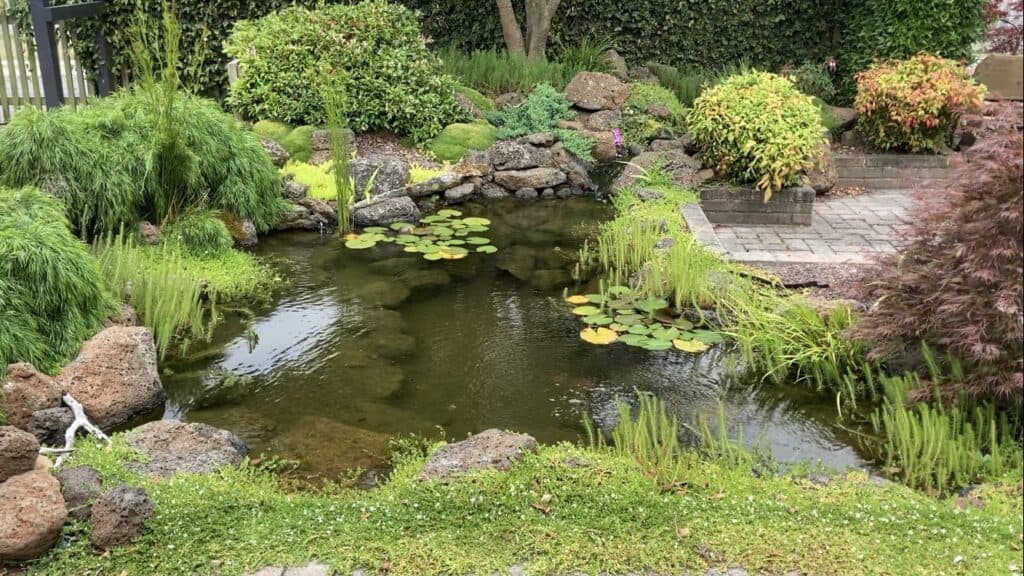
Not only does it keep your pond balanced and healthy, it also looks great. Planted bog filters can double as a garden feature, blending seamlessly into streams or waterfalls.
Final Thoughts
A bog filter is:
✅ Cheaper to build
✅ Cheaper to run
✅ Packed with good bacteria
✅ Consistently clear and healthy
✅ Low-maintenance
✅ Based on nature’s own design
It’s a no-brainer if you want a pond that looks amazing and runs smoothly without costing a fortune.
👉 If you would like a full blueprint on how to build and maintain a pond with a bog filter check out my complete guide.
About to build a pond… or already have one?
Sign up for my email list and I’ll send you DIY-friendly pond tips, along with a few helpful tools like calculators, gear recommendations, and more.