
When it comes to pond keeping, I’m not exactly known for being hands-on. My approach? Set and forget. And yes — it actually works.
In this post, I’ll show you how I keep my fish happy and healthy with minimal effort, walk you through the most common pond fish problems, and explain what your fish might be trying to tell you.
If you’re new here, I’m Kev — I help people build and maintain backyard ponds without spending a fortune.
It All Starts With Water Quality
Healthy fish need healthy water. It’s that simple.
If your pond water is clean and stable, everything else gets easier. But if your water quality drops, your fish get stressed — and stressed fish are far more likely to get sick.
The most important thing you can do? Set up a proper filtration system.
Why I Use Bog Filters
There are plenty of ways to filter pond water, but I’m a big fan of bog filtration. It’s how nature filters water — using beneficial bacteria, tiny critters, and plants.
Bog filters are fully customizable and work for any size pond (even aquariums). They’re low-maintenance, DIY-friendly, and once they’re up and running, they’re about as hands-off as it gets.
👉 I’ve built a free Bog Filter & Pump Calculator to help you size everything correctly — grab it here.
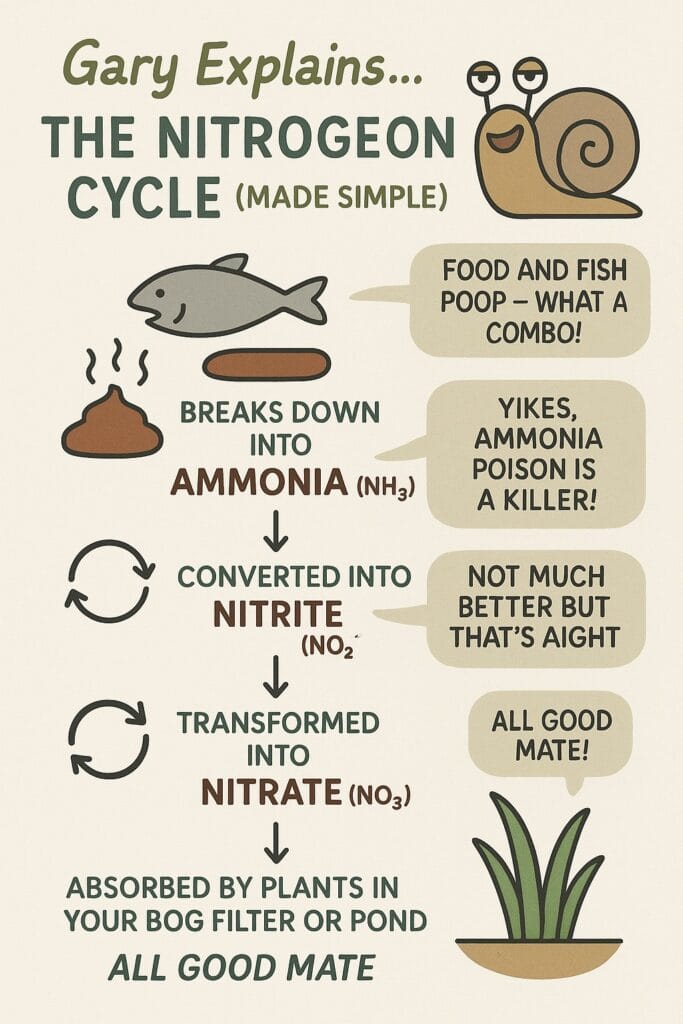
The Nitrogen Cycle (Without the Jargon)
Here’s the lazy version of how fish waste gets processed:
- Fish eat, poop, and breathe — that produces ammonia
- Good bacteria turn ammonia into nitrite (still toxic)
- Other bacteria turn nitrite into nitrate (less toxic)
- Plants and water changes help reduce nitrate
The more fish you have, the more ammonia they produce — which means more filtration is needed. Fewer or smaller fish? You can get away with less.
My Pond Philosophy: Build an Ecosystem
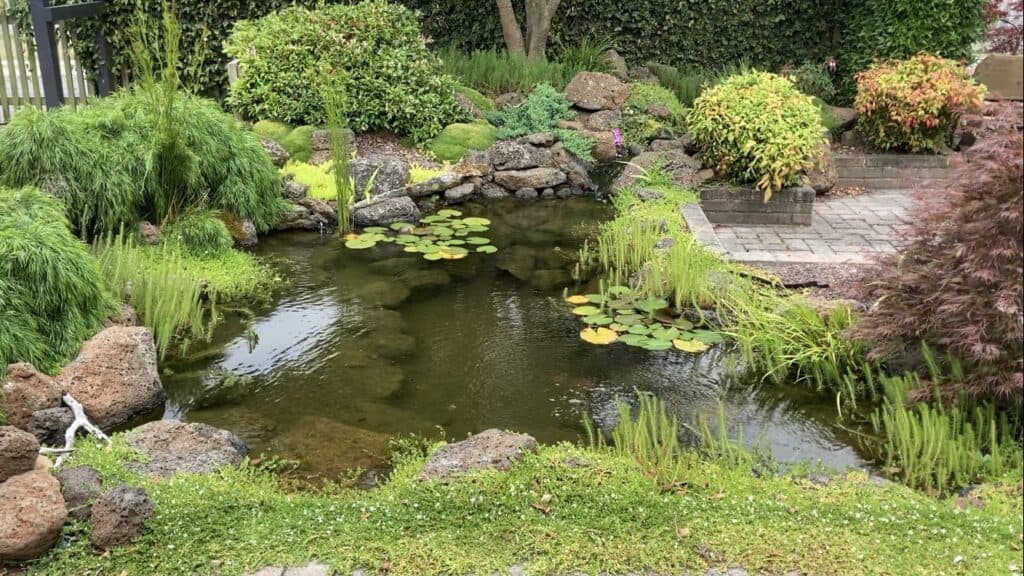
I don’t just build a pond. I build a mini ecosystem. Think pebbles, wood, leaves, plants, rocks, streams — even some algae and biofilm. Everything works together to keep the water healthy and stable.
It’s not sterile, but it’s incredibly resilient. I don’t feed my fish — they eat naturally from the pond. I don’t obsess over numbers — the system balances itself. Fish breed when there’s food, and when there isn’t… well, nature has a way of thinning the herd.
What If You Want a Cleaner Look?
That’s totally fine too! You’ll just need to be a little more active.
- Test your water regularly (pH, ammonia, nitrite, nitrate, hardness)
- Keep oxygen levels high
- Do regular water changes and filter maintenance
- Watch your stocking density and feeding habits
Both styles work — mine just leans more toward lazy zen mode.
When Things Go Wrong: What to Look For
Even in a well-balanced pond, things can go sideways. Here’s what your fish might be telling you:
1. Gasping at the surface?
- You’re low on oxygen (especially common in summer)
- Add aeration, increase water movement, or cool the water slightly
- Check for overstocking or ammonia spikes
2. Clamped fins (held tight to the body)?
- Classic stress sign
- Check your water quality
- Could be predators or sudden temperature changes
- Might be parasites (look for fish rubbing or flashing)
3. Fuzzy patches or ulcers?
- Likely bacterial infections
- Again, water quality is the first thing to check
- Salt can help reduce stress and assist healing
4. Fish sitting still on the bottom?
- Normal in cold water (especially for koi and goldfish)
- If water’s not cold, test parameters and hold off on feeding
What About Medications?
They exist, but in most cases, clean water and a bit of salt will sort things out. Fancy meds are usually a last resort — not your first move.
Summary
- Water quality is king
- Bog filters = less work, more balance
- Fish will tell you when something’s off — pay attention
- You don’t need to micromanage if you build the system right
If you want help setting it all up, you can use my complete blueprint guide, virtual Kev assistant and private community- click here for more info.
About to build a pond… or already have one?
Sign up for my email list and I’ll send you DIY-friendly pond tips, along with a few helpful tools like calculators, gear recommendations, and more.