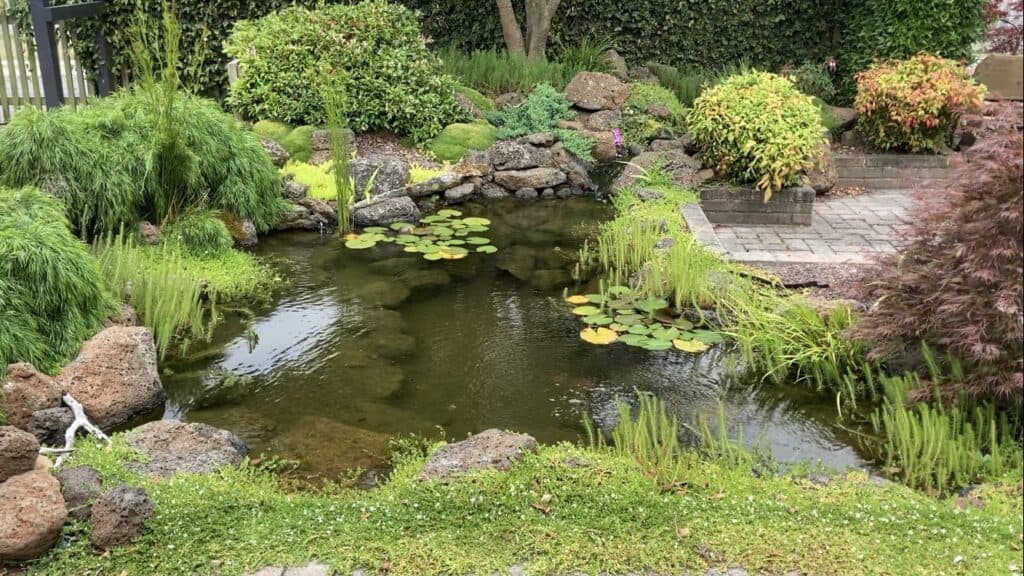
Every winter I get the same question: “What happens to my bog filter when the water gets cold — should I shut it down, drain it, or just let it run?”
It’s a fair question. Winter brings big changes to your pond’s ecosystem, and knowing what actually happens inside your filter can help you protect your pond (and your fish) through the cold months.
Your plants behave the same way. They yellow off, stop growing, and stop pulling nutrients from the water. It’s worth trimming back and removing as much of that dead plant material as you can before it decomposes. You’ll never get it all, but it’ll help reduce algae growth through winter and early spring.
The good news: as your bacteria and plants slow down, so does everything else — including your fish and the overall biological load on the pond.
Should You Leave the Filter Running?
That depends on your climate.
Mild or Temperate Climates
If your pond doesn’t freeze solid (like here in Australia), keep it running year-round. It’s easier, safer for your bacteria, and your ecosystem stays more stable.
Cold or Freezing Climates
In parts of North America, Canada, or Northern Europe, you might choose to shut your pump down over winter to prevent “super-cooling” the pond. If you do this:
Drain your pipes and fittings so expanding ice doesn’t crack them.
Insulate exposed plumbing and even the bog walls if possible.
Keep a hole in the ice for gas exchange — use a small air stone, a pump near the surface, or a pond heater.
Avoid mixing warm bottom layers with cold surface layers — you want that thermal layering to protect fish.
💡 Tip: If it’s just a wildlife pond and every other pond in your area freezes solid, don’t stress about keeping a hole open. Nature’s critters are built to handle it.
Special Care for Small Container Bogs
Above-ground bog filters (like tubs, barrels, or troughs) are different — they don’t have the thermal mass of an inground pond, so they can freeze right through.
In deep-freeze areas, it’s safest to drain them completely, store the pump indoors, and cover the top so snow or rain doesn’t refill and refreeze it.
In milder regions, you can leave them full and running.
Whatever you do, don’t let them half-freeze with stagnant water — that’s when damage and bad smells happen.
Watch Out for Winter Leaks and Ice Dams
“Mystery leaks” in winter are often caused by ice, not your liner.
Here’s what to watch for:
Frozen or blocked overflows — when the outlet ices up, water finds a new (usually unwanted) low point to escape.
Narrow pipes with slow trickling flow freeze first; wider pipes with strong flow resist freezing better.
Streams and waterfalls can form ice dams that redirect water over the liner edge — keep an eye on them.
Always monitor water levels through winter; a small drop could signal a blockage or ice buildup.
Spring Start-Up: Waking the Bog Back Up
When the weather starts to warm and water temps rise above 10 °C (50 °F), your bog filter will slowly come back to life.
Here’s how to help it along:
Remove old plant material and clear any debris from the gravel.
Give the filter bed a light flush — don’t go overboard, you just want to free up trapped muck.
The bacteria and plants need time to re-establish.
If there’s algae in the pond, the fish will have plenty to graze on anyway.
As temperatures rise, the entire system — bacteria, plants, and fish — will gradually kick back into gear. If the ecosystem’s balanced, you’ll glide through spring with clear, healthy water.
Winter Care Summary
✅ Keep water moving if you can — especially in milder climates. ✅ Drain and store pumps or plumbing that might freeze solid. ✅ Trim plants before they decay. ✅ Watch for ice dams or overflow blockages. ✅ Gently restart your bog in spring with bacteria and patience.
Final Thoughts
Winter pond care doesn’t need to be complicated. A little preparation and observation go a long way.
If you want more help designing or maintaining a crystal-clear, low-maintenance pond, you can use my full Pond Formulas Blueprint that walks you through everything step by step.
And if you’ve made your own winter tweaks or learned lessons from your climate, share your pond story here— it helps others more than you’d think.
Stay warm, and happy pond-keeping! 🐟
About to build a pond… or already have one?
Sign up for my email list and I’ll send you DIY-friendly pond tips, along with a few helpful tools like calculators, gear recommendations, and more.
G'day, I'm Kev.
My pond and water garden started with simple aquariums. I have created many ponds and water gardens around our home: Fish ponds, Aquaponic systems, grey-water wetlands and bog filters. My favourite topic is water filtration.
Sometimes the most interesting pond systems aren’t the most complicated ones.
Vu Tran’s pond in Da Lat, Vietnam holds only around 2.5 cubic metres (2,500 litres / 660 gallons) of...
The best plants for a bog filter are plants that tolerate wet roots, suit your climate and water depth, and are easy to trim or thin out.
In my ponds in south-east Australia, I use plants...