
Hi Kev!
I’m Alla from Interior Alaska. Thanks so much for sharing your pond knowledge!
Before starting this project, I binge-watched most of your pond videos, along with videos from SerpaDesign on YouTube. Both were excellent resources.
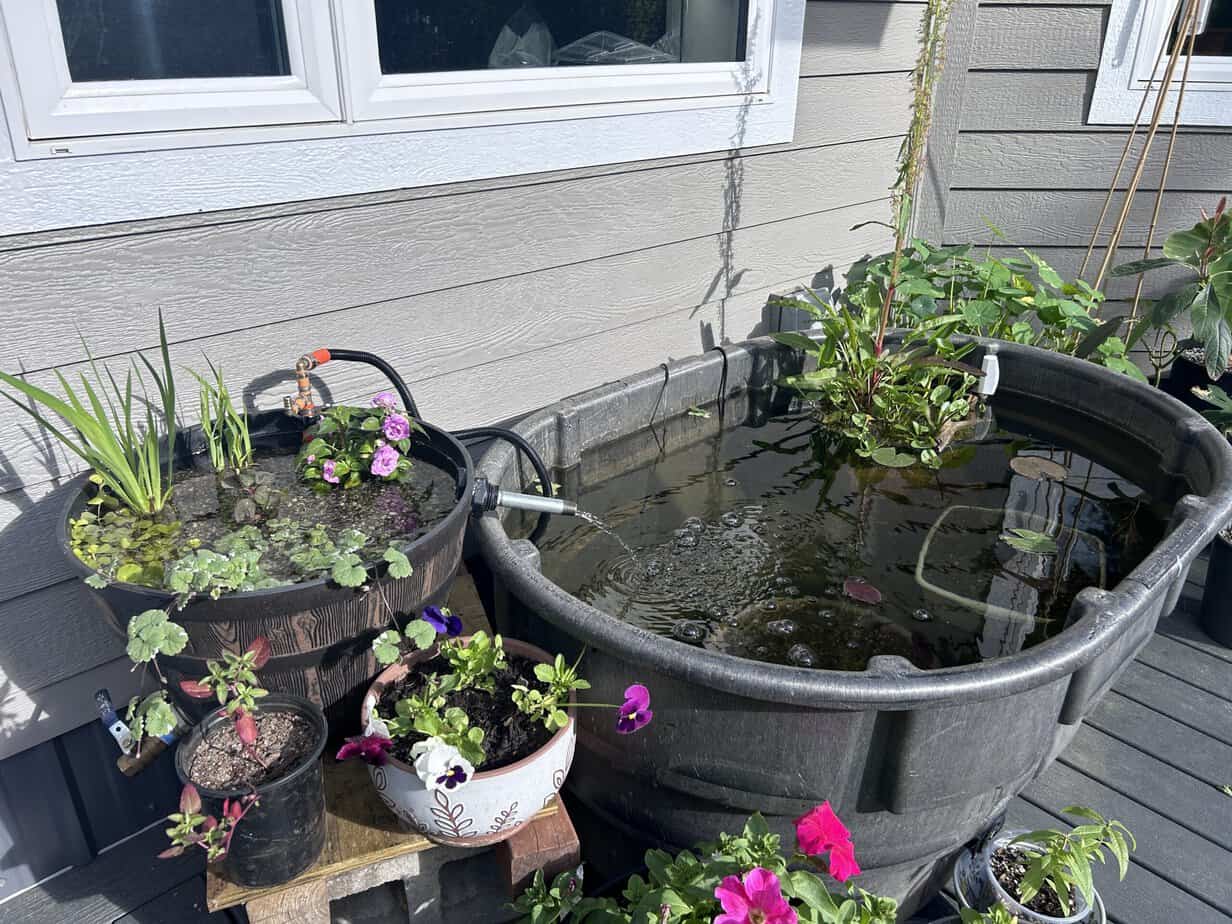
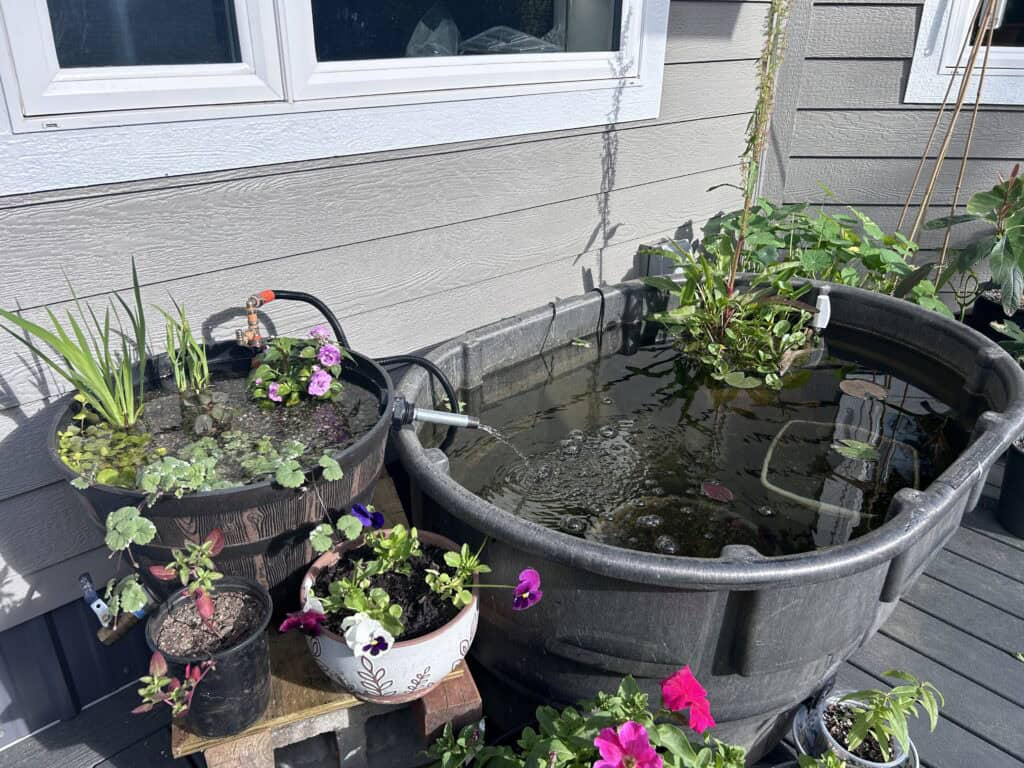
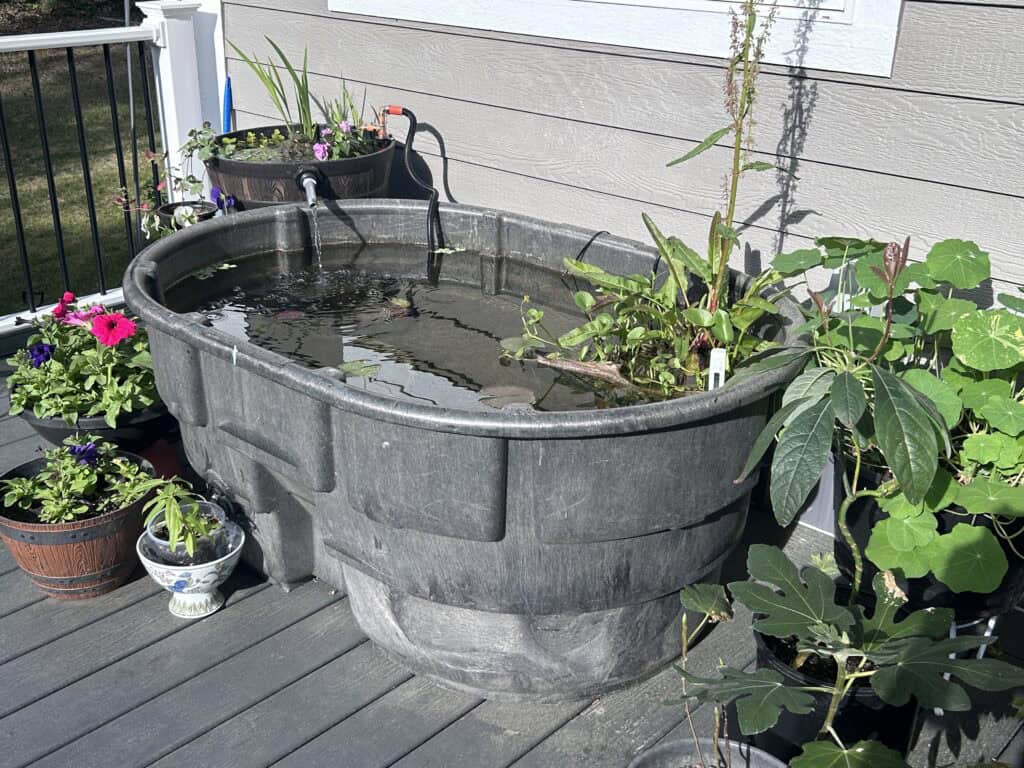
This is a 150-gallon Rubbermaid stock tank (amazon link) that my husband and I converted into a patio pond this spring.
The entire setup cost around $200 USD because we already had many of the materials and were able to source much of the rest second-hand.
A Simple DIY Build
The setup was very simple.
Once we had a plan and gathered the supplies, it was mostly a matter of positioning everything, filling it with water, and connecting the plumbing.
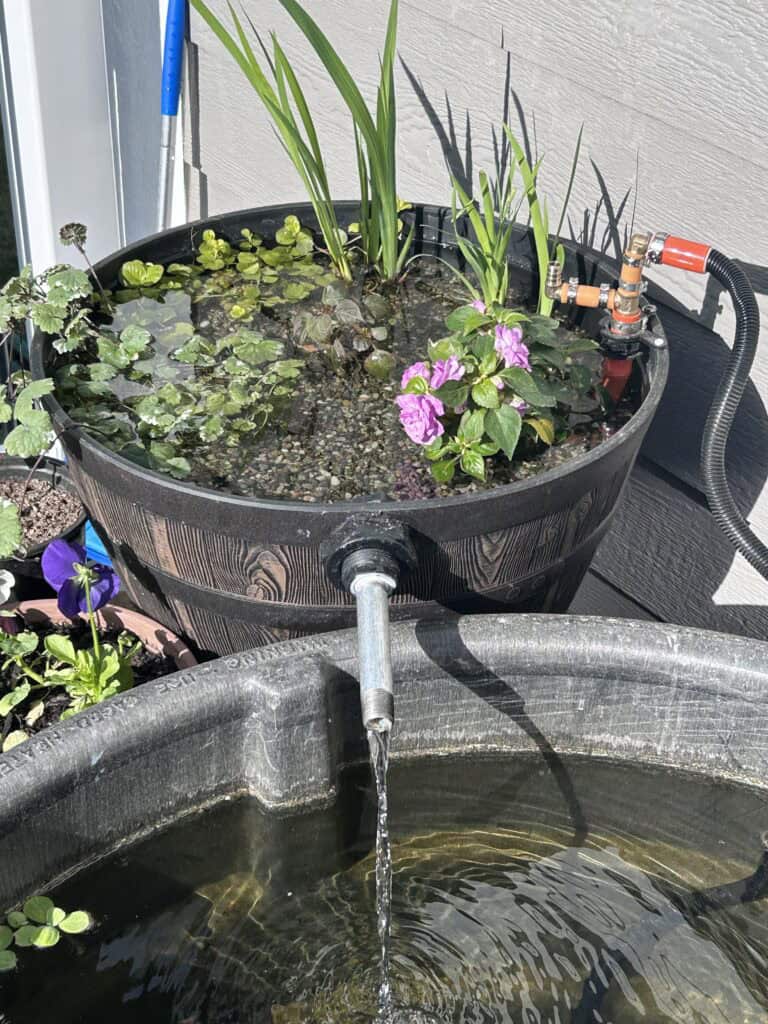
We converted a 15-gallon plastic planter from Walmart into a bog filter and run it using a small 95 GPH Amazon pump. The pump sits inside a simple pre-filter that I made using a plastic pot and some pond filter media.
It’s been working marvelously and keeps the water crystal clear. 👍🏻
We filled the bog filter with rocks and gravel from our yard and added a bag of basic building sand to the bottom of the pond. The sand creates a nicer visual effect and gives the plants something to anchor themselves into.
Fish and Plants
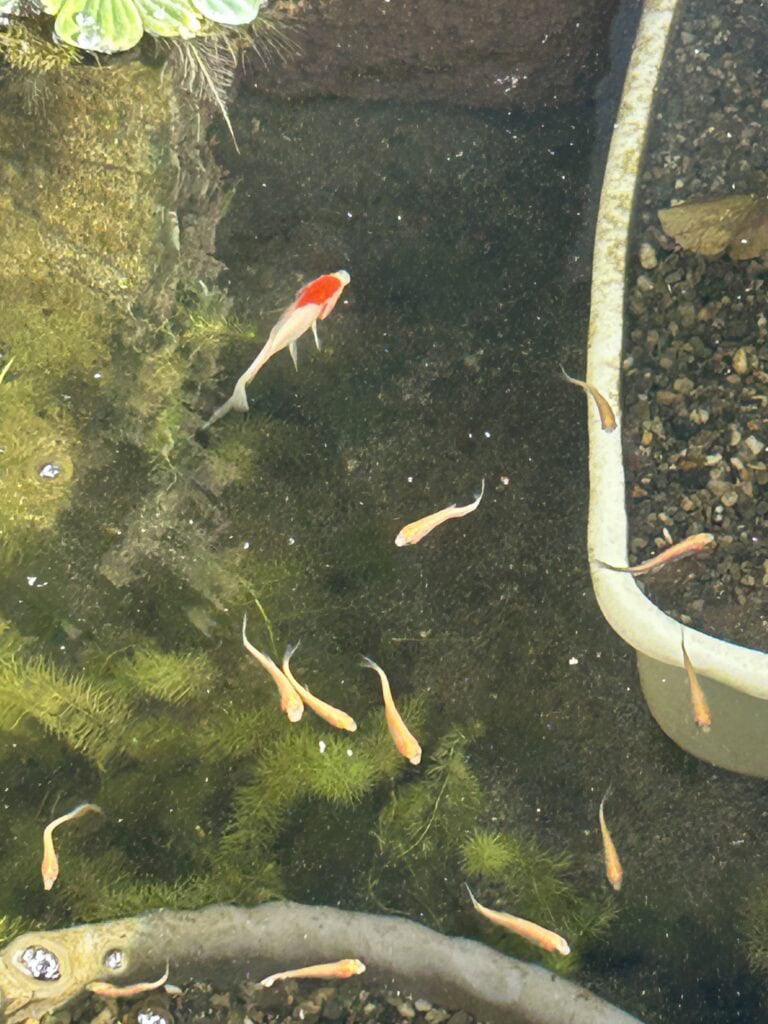
We’ve recently added 30 minnows and 2 goldfish.
My children and I spent time exploring local lakes and ponds and discovered some native hornwort and bladderwort. Both have established themselves nicely, and the fish seem to enjoy using them as cover.
We also collected some marginal plants that are now growing in a shallow pot inside the pond, along with native iris in the bog filter.
In addition to the native plants, I’ve added a few non-native species including water lilies, water lettuce, and some annual flowering plants in the bog filter.
More Than Just a Pond
As a homeschool mum, this entire project has been a fun and rewarding experience.
It has also given us a great opportunity to learn more about pond ecology together. Your YouTube videos were used during the science portion of our schooling several times! 😁
What’s Next?
The next step is an in-ground pond that might be capable of overwintering fish during our prolonged cold spells of -40°C. 🥶😅
Thanks again for sharing your experience and knowledge, Kev.
This pond probably wouldn’t have happened for several more years if it wasn’t for your videos.
Sincerely,
Alla
A Note From Kev
I love this pond.
Not because it’s big or expensive, but because it shows what can be achieved with a simple design, a bit of creativity, and a willingness to learn.
The bog filter is a great example of understanding the job a component needs to do rather than buying expensive equipment. The fact that Alla and her family were able to build a crystal-clear pond using second-hand materials, native plants, and a simple DIY filter is exactly what pond keeping should be about.
What I probably love most, though, is that the pond became part of their homeschooling journey. Ponds are incredible teaching tools. They can help children learn about biology, ecology, water chemistry, plants, fish, insects, and wildlife—all while creating something beautiful.
Thank you for sharing your pond with us, Alla. I can’t wait to see what you build when you tackle that -40°C pond!
About to build a pond… or already have one?
Sign up for my email list and I’ll send you DIY-friendly pond tips, along with a few helpful tools like calculators, gear recommendations, and more.